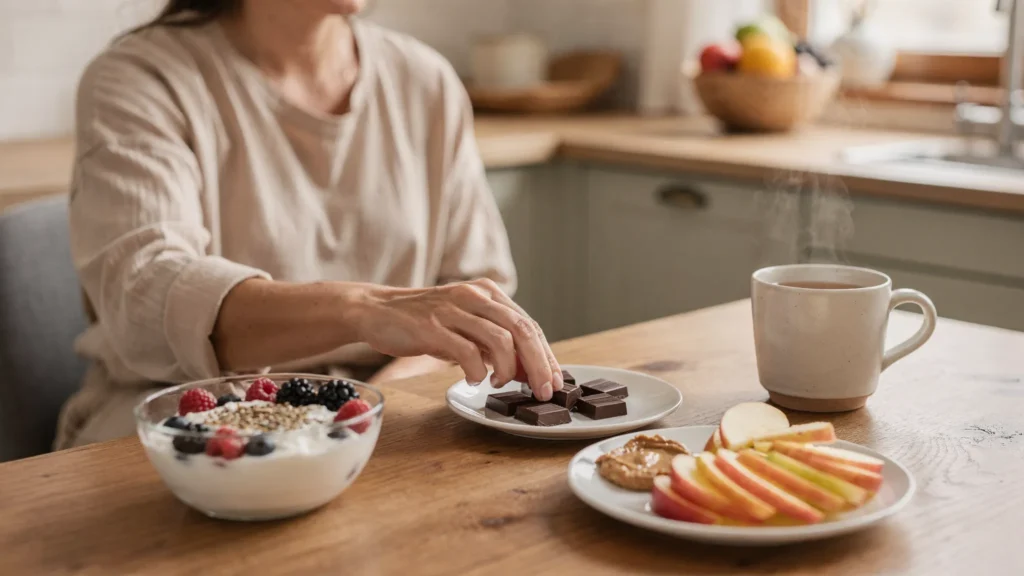

Batch cooking without diet culture means preparing food in advance to support your health, time and energy, not to punish your body or force yourself into rigid rules. A healthier approach focuses on balanced, satisfying meals you actually enjoy, with enough flexibility for real life.
If traditional meal prep has ever made you feel boxed in, bored or guilty, you are not alone. Many people associate batch cooking with rows of identical containers, calorie targets and “being good” from Monday to Friday. That is not the kind of food planning I encourage. Food can be organised without becoming controlling, and batch cooking can be a genuinely supportive tool when it comes from care rather than criticism.
What does batch cooking without diet culture mean?
Batch cooking without diet culture is about making nourishing choices easier, especially when life is busy, your energy is low or your hormones are changing. It is not about shrinking meals, removing whole food groups or preparing “perfect” lunches that leave you hungry by 3pm.
Diet culture tends to turn food into a moral issue. You are “good” if you eat the salad, “bad” if you eat the pasta and “starting again Monday” if you have pudding. A non-diet approach takes that pressure away. It asks a different question: what can I prepare now that will help future me feel well-fed, steady and looked after?
That shift matters. When your meals are built around nourishment rather than restriction, you are more likely to eat consistently, include a wider variety of foods and avoid the all-or-nothing cycle that so many diets create.
Why can diet culture batch cooking feel so unhelpful?
Diet culture batch cooking often looks efficient from the outside, but it can quickly become another set of rules. The problem is not the cooking in advance. The problem is the mindset behind it.
For example, many plans are built around very low-calorie meals, tiny portions or a narrow list of “clean” foods. That might feel motivating for a few days, but it rarely supports long-term wellbeing. If your lunch is too small or too low in protein, fibre and healthy fats, you may feel tired, snacky, irritable or preoccupied with food later in the day.
It can also disconnect you from your body. If you have prepared exactly five lunches and told yourself you must eat them no matter what, there is little room for appetite, digestion, mood, social plans or changing needs across the week. For women in perimenopause or menopause, this flexibility is especially important because appetite, sleep, stress resilience and blood sugar balance can fluctuate.
There is also an emotional cost. If batch cooking becomes another way to judge yourself, it can make healthy eating feel harder rather than easier. If food rules are causing anxiety or you have a history of disordered eating, please consider speaking to your GP or getting support from Beat, the UK eating disorder charity.
What is the healthier goal of batch cooking?
The healthier goal is simple: reduce daily food stress while increasing the chance that you eat meals that support your body. That might mean more protein at breakfast, more colourful vegetables across the week, better lunch options when work is busy or fewer last-minute takeaways because you are too tired to cook.
This approach sits well alongside the principles of the NHS Eatwell Guide, which encourages variety across fruit and vegetables, starchy carbohydrates, protein foods, dairy or alternatives and nourishing fats. You do not need to follow that plate perfectly at every meal. It is a helpful guide, not a test.
In practice, batch cooking can support many health goals without becoming restrictive. It may help with steady energy, digestion, cholesterol management, blood sugar balance and sustainable weight management. It can also be helpful during demanding seasons of life, such as caring responsibilities, recovery from illness or times when cooking from scratch every day simply is not realistic.
What does non-diet batch cooking look like in practice?
Non-diet batch cooking still includes planning and preparation, but it feels more flexible. Instead of asking, “What am I allowed to eat?”, it asks, “What would make eating well easier this week?”
| Diet culture batch cooking | Healthier batch cooking |
|---|---|
| Same meal every day because it is “safe” | A few mix-and-match options for variety |
| Small portions designed to create hunger | Satisfying portions that support energy |
| Foods labelled good, bad or forbidden | Foods chosen for nourishment, enjoyment and practicality |
| All-or-nothing thinking if plans change | Flexible meals that can adapt to real life |
| Focus only on calories | Focus on protein, fibre, colour, flavour and satisfaction |
This does not mean nutrition does not matter. It means nutrition is used as support, not punishment. A meal can be both health-promoting and comforting. It can include pasta, potatoes, olive oil, cheese, bread or pudding. The overall pattern of eating matters far more than one individual ingredient.

How do you build a balanced batch-cooked meal?
A simple formula can help you prepare meals that keep you fuller and more energised without counting every gram. Aim to include protein, fibre-rich carbohydrates, colourful plants and satisfying fats where possible.
Protein might come from eggs, chicken, fish, Greek yoghurt, tofu, tempeh, lentils, beans or chickpeas. It supports muscle maintenance, immune function and satiety, which is especially useful from midlife onwards when preserving muscle becomes more important.
Fibre-rich carbohydrates include oats, potatoes, sweet potatoes, brown rice, quinoa, wholegrain pasta, beans, lentils and vegetables. These foods can support digestion, feed beneficial gut bacteria and help meals feel more satisfying. If you struggle with bloating or IBS-type symptoms, the right type and amount of fibre can vary, so a personalised approach is often more helpful than simply adding more.
Colourful plants bring vitamins, minerals and plant compounds that support general health. Think roasted carrots, peppers, broccoli, spinach, courgettes, tomatoes, berries, herbs and salad leaves. Frozen vegetables are absolutely fine and can be a brilliant way to reduce waste.
Satisfying fats, such as olive oil, avocado, nuts, seeds and oily fish, help with flavour and fullness. They also support absorption of fat-soluble vitamins, including vitamins A, D, E and K.
If you would like practical ideas that follow this kind of balanced structure, my high-protein wholefood batch cook recipes are a helpful starting point.
How can you batch cook flexibly instead of rigidly?
One of the easiest ways to move away from diet culture is to prepare components rather than fully fixed meals. This gives you structure without making the week feel repetitive.
You might cook a tray of roasted vegetables, a protein option, a pan of wholegrains and one or two sauces or dressings. From there, you can create different meals depending on what you fancy. Roasted vegetables and chickpeas can become a warm bowl with tahini dressing, a wrap with hummus or a side dish with fish and potatoes.
This style of batch cooking is especially useful if you cook for other people, have changing work patterns or know you get bored easily. It also gives you permission to add extras. A prepped soup might become more satisfying with a slice of sourdough, grated cheese, pumpkin seeds or leftover chicken. A salad might need lentils, feta, avocado or a baked potato to become a proper meal.
A gentle planning rhythm can help:
- Choose two meals that would make the biggest difference this week, such as breakfast and lunch.
- Prepare one protein-rich option, such as boiled eggs, lentils, chicken, tofu or yoghurt pots.
- Add one easy vegetable preparation, such as roasted veg, soup or washed salad leaves.
- Keep one quick back-up meal available, such as eggs on toast, soup from the freezer or beans with a baked potato.
- Leave space for normal life, including meals out, family preferences and days when plans change.
You do not need a fridge full of matching containers for batch cooking to count. Even preparing one soup, one breakfast option or one protein source can make the week easier.
What if your health needs are more specific?
A non-diet approach can still be targeted. In fact, this is where personalised nutrition becomes particularly valuable.
If you are navigating perimenopause or menopause, batch cooking can help you include regular protein, fibre and phytoestrogen-rich foods such as soya, flaxseed, chickpeas and lentils. These foods may support hormone balance, heart health and steadier energy, although they are not a replacement for medical care where that is needed.
If digestion is your main concern, batch cooking can be a double-edged sword. Large amounts of beans, onions, garlic or raw vegetables are healthy for many people, but they can aggravate symptoms for others. A gentler plan might include soups, stews, cooked vegetables, oats, rice, fish, eggs and carefully chosen pulses in manageable portions.
If you are recovering from cancer treatment or going through treatment, your needs may be very different from someone batch cooking for general wellbeing. Appetite, taste changes, fatigue and digestive tolerance all matter. Nutrition can support recovery and strength, but it should sit alongside your oncology team’s guidance. This is an area where one-to-one support can be especially helpful.
If weight management is your goal, batch cooking can support consistency without dieting. The focus is not on eating as little as possible. It is about making balanced meals easier to choose, reducing skipped meals and avoiding the cycle of restriction followed by overeating. You may also find my article on meal prep for weight loss without dieting helpful if this is something you are working on.
What are the most common batch cooking mistakes?
The most common mistakes usually come from doing too much too soon. If you spend your whole Sunday cooking meals you do not really enjoy, it is understandable if you never want to batch cook again.
| Common mistake | A kinder alternative |
|---|---|
| Cooking five brand-new recipes in one day | Start with one familiar recipe and one simple extra |
| Making meals too low in calories or fat | Include enough protein, carbohydrates and healthy fats |
| Ignoring taste and texture | Add herbs, spices, sauces, crunch and freshness |
| Planning every meal with no flexibility | Leave gaps for leftovers, meals out and appetite changes |
| Expecting perfection | Treat batch cooking as support, not a weekly exam |
Flavour is often the missing piece. Lemon juice, fresh herbs, toasted seeds, yoghurt dressings, pesto, chilli oil, tahini, pickles or a sprinkle of cheese can completely change a meal. Enjoyment is not a bonus. It is part of what makes healthy eating sustainable.
Where can you find non-diet batch cooking ideas?
Look for recipes that feel generous, colourful and realistic. A good batch cooking recipe should give you enough energy, include foods you like and be easy to adapt. If it relies on tiny portions, long lists of banned foods or language that makes you feel guilty, it may not be the right fit.
You can find more practical, food-first ideas in my nutrition library, including guidance on eating well in a way that supports your body without rigid rules.
The best batch cooking plan is one you can actually live with. That might mean cooking on a Sunday afternoon, but it might also mean chopping vegetables while dinner is in the oven, doubling one recipe midweek or freezing two portions of soup whenever you make it. Small steps done consistently are usually more powerful than a dramatic reset.
Frequently Asked Questions
Can batch cooking help me eat healthier without dieting? Yes. Batch cooking can help you eat healthier by making balanced meals easier to access when you are busy or tired. The key is to focus on nourishment, satisfaction and flexibility rather than restriction or strict food rules.
Do I need to count calories when batch cooking? Not necessarily. Many people do better by building meals around protein, fibre, colourful plants and satisfying fats. If you have a specific medical or weight-related goal, personalised guidance can help you find an approach that supports your needs without becoming obsessive.
What are the best foods to batch cook? Soups, stews, roasted vegetables, cooked grains, lentil dishes, chilli, overnight oats and protein options such as chicken, tofu, eggs or beans all work well. Choose foods you genuinely enjoy and can combine in different ways across the week.
How long does batch-cooked food last in the fridge? Many cooked meals keep safely in the fridge for around 3 to 4 days when cooled and stored properly, but this depends on the ingredients. If you are unsure, freeze portions promptly and follow UK food safety guidance.
What if meal prep makes me feel restricted? Scale it back. Try preparing one helpful item rather than planning every meal, and include foods you enjoy rather than only foods you think you “should” eat. If meal planning brings up anxiety or guilt, it may be worth getting professional support.
A gentler way to plan your food
Batch cooking without diet culture is not about being perfect. It is about making your week feel easier, your meals more nourishing and your relationship with food a little calmer.
If you would like to talk through how nutrition could support your energy, digestion, hormones, weight management or general wellbeing, I would love to hear from you. You can book a free 15-minute discovery call and we can have a relaxed chat about what you need, whether that is in person in Cheshire or by video call anywhere in the UK.