
Menopause can affect high cholesterol because falling oestrogen changes how your body manages blood fats, where you store fat and how sensitive you are to insulin. Menopause high cholesterol is common, especially after 40, but it is not something you simply have to accept as inevitable. Food, movement, sleep and stress support can all make a meaningful difference alongside any medical advice from your GP.
If your cholesterol has crept up for the first time in perimenopause or after menopause, it can feel frustrating, especially if you have not dramatically changed what you eat. The important thing to know is that this shift often has a hormonal component. It is not a personal failure, and it does not mean you need to follow a harsh, joyless diet.
Why menopause high cholesterol can happen after 40
Oestrogen has a protective role in women’s cardiovascular health. As levels naturally decline through perimenopause and menopause, some women see changes in LDL cholesterol, HDL cholesterol and triglycerides. LDL is often called “bad” cholesterol because higher levels can contribute to fatty build-up in the arteries over time.
The British Heart Foundation explains that the risk of heart disease rises after menopause, partly because of changes linked to lower oestrogen. This does not mean menopause causes heart disease on its own, but it does mean midlife is a sensible time to pay closer attention to blood pressure, cholesterol, blood sugar and waist measurement.
For many women, menopause high cholesterol is not caused by one food or one habit, but by a combination of hormonal change, body composition, stress load, sleep disruption and diet patterns that no longer suit the body as well as they once did.
The oestrogen connection
Before menopause, oestrogen appears to help support a healthier lipid profile, particularly by influencing LDL and HDL levels. As oestrogen drops, LDL cholesterol may rise and HDL cholesterol may become less protective in some women. Triglycerides, another type of blood fat, may also increase, particularly if blood sugar is less stable.
This can happen even in women who are active and eat reasonably well. It is one reason I often encourage women in their 40s and 50s to ask for a cholesterol check if they have not had one recently, especially if there is a family history of high cholesterol, heart disease, diabetes or high blood pressure.
Body fat distribution can change too
Many women notice more weight around the middle during perimenopause and menopause. This change is not just cosmetic. More fat around the abdomen can be linked with insulin resistance, meaning the body has to work harder to keep blood sugar steady.
When insulin resistance increases, the liver may produce more triglycerides and cholesterol particles. This is why menopause high cholesterol often appears alongside other midlife changes, such as weight gain around the waist, energy crashes, cravings or feeling more tired after meals.
What might change on your cholesterol blood test?
Cholesterol is not just one number. A full lipid profile gives a clearer picture of cardiovascular risk, especially during midlife. Your GP or practice nurse may also look at your age, blood pressure, smoking status, family history, diabetes risk and other markers before advising on the next step.
| Cholesterol marker | What it broadly means | Why it matters in menopause |
|---|---|---|
| LDL cholesterol | Often described as “bad” cholesterol | May rise as oestrogen declines |
| HDL cholesterol | Often described as “good” cholesterol | May be less protective if triglycerides are high |
| Non-HDL cholesterol | Total cholesterol minus HDL | A useful marker of artery-related risk |
| Triglycerides | Fats carried in the blood | Can rise with insulin resistance, alcohol or high sugar intake |
| Total cholesterol to HDL ratio | A comparison of total cholesterol and HDL | Helps give context beyond total cholesterol alone |
High cholesterol usually has no obvious symptoms. NHS guidance on high cholesterol explains that a blood test is the only reliable way to know your levels. This is why regular checks matter, even if you feel well.
What should you eat to support cholesterol in menopause?
The most helpful approach is not usually a very low-fat diet. Your hormones, brain, skin and cells all need fats. The goal is to improve the quality of fats, increase fibre and build meals that keep blood sugar steadier.
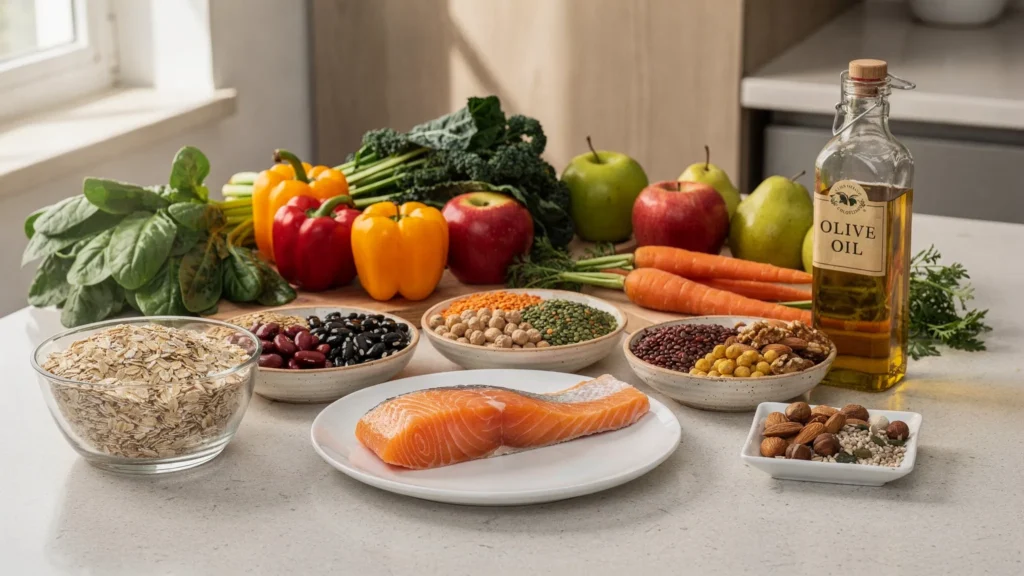
If you are dealing with menopause high cholesterol, think less about restriction and more about adding foods that actively support your body. A Mediterranean-style pattern, based around vegetables, pulses, nuts, seeds, olive oil, fish and minimally processed whole foods, is a good starting point for many women.
For a wider look at food choices during this life stage, my guide to menopause nutrition for energy, weight and hormone balance explains how protein, fibre and healthy fats work together.
Prioritise soluble fibre
Soluble fibre is particularly useful because it binds with cholesterol-rich bile acids in the gut and helps carry them out of the body. Your liver then uses cholesterol to make more bile acids, which may help support healthier LDL levels over time.
Good sources include oats, barley, beans, lentils, chickpeas, apples, pears, ground flaxseed, chia seeds and many vegetables. You do not need to eat all of these at once. Starting with porridge topped with berries and seeds, adding lentils to soup or including beans in a stew can be simple, realistic changes.
Choose heart-supportive fats
Swapping some saturated fats for unsaturated fats may help support cholesterol balance. In practice, that might mean using extra virgin olive oil instead of butter more often, choosing nuts instead of biscuits for a snack or eating oily fish such as salmon, sardines or mackerel if you enjoy them.
Saturated fat is found in foods such as butter, cream, cheese, fatty cuts of meat, sausages, pastries and many ultra-processed foods. You do not have to cut these out completely, but if they appear daily, reducing the frequency can be useful.

Keep blood sugar steadier
Blood sugar and cholesterol are closely connected. If meals are built mainly around refined carbohydrates, such as toast, cereal, biscuits, white pasta or sweet snacks, you may feel hungry again quickly and experience energy dips. Over time, this pattern can contribute to higher triglycerides in some people.
A steadier plate usually includes protein, fibre-rich carbohydrates, healthy fats and plenty of colour. For example, eggs with mushrooms and tomatoes on seeded toast, a lentil and vegetable soup with olive oil or Greek yoghurt with berries, nuts and ground flaxseed.
What foods are worth limiting without going on a strict diet?
When women come to me with menopause high cholesterol, they often worry they will be told to give up everything they enjoy. That is not my approach. Instead, we look at which everyday patterns are having the biggest impact and make changes that feel manageable.
The foods most worth reviewing are often ultra-processed snacks, sugary cereals, frequent pastries, processed meats, takeaways, large portions of cheese, butter-heavy meals and regular alcohol. Alcohol deserves a special mention because it can affect sleep, hot flushes, liver function, blood sugar and triglycerides.
This does not mean you can never have a glass of wine, a slice of cake or a cheeseboard. It means your usual weekly pattern matters more than the occasional choice. A realistic plan should leave room for enjoyment, otherwise it rarely lasts.
For more detailed food guidance, you may find my article on what to eat and what to limit with high LDL cholesterol helpful.
The lifestyle pieces that make food work harder
Food is powerful, but it does not work in isolation. During menopause, sleep disruption, stress and reduced muscle mass can all influence cholesterol, blood sugar and weight. Supporting these areas can make dietary changes more effective.
Strength training is especially valuable in midlife because muscle helps your body manage glucose. This does not need to mean joining a gym if that does not appeal. Bodyweight exercises, resistance bands, Pilates, yoga with strength elements or supervised weights can all help.
Walking is another simple but effective habit. A brisk walk after meals may support blood sugar control, digestion and mood. If you are tired or overwhelmed, start small. Ten minutes after lunch or dinner is still worthwhile.
Sleep matters too. Poor sleep can increase cravings, reduce motivation to cook and make blood sugar harder to regulate. If night sweats, anxiety or early waking are affecting you, it is worth addressing those symptoms rather than blaming yourself for feeling depleted.
When should you speak to your GP?
Menopause high cholesterol should always be viewed in the context of your overall health. Speak to your GP if your cholesterol is high, if you have a strong family history of heart disease, if you have high blood pressure, diabetes, chest pain, breathlessness or you are unsure what your results mean.
Medication such as statins can be appropriate for some people, depending on overall cardiovascular risk. Nutrition can sit alongside medical care, but you should not stop prescribed medication without discussing it with your doctor.
It is also worth asking for clarity on your full lipid profile, not just total cholesterol. Knowing your LDL, HDL, non-HDL cholesterol and triglycerides gives you a better starting point for targeted changes.
How personalised nutrition support can help
Generic advice can be helpful, but it often misses the reality of your life. You may be juggling work, caring responsibilities, poor sleep, digestive symptoms, cravings or a body that simply feels different from a few years ago.
Personalised nutrition looks at your cholesterol results alongside your menopause symptoms, digestion, energy, weight history, stress levels, food preferences and routine. From there, you can build a plan that is practical rather than perfect.
For example, one woman may need more soluble fibre and less alcohol, another may need better protein at breakfast, and another may need support with stress, sleep and regular meals before cholesterol changes begin to make sense. The right plan should fit your body and your life.
Frequently Asked Questions
Can menopause cause high cholesterol? Menopause can contribute to higher cholesterol because falling oestrogen affects how the body processes blood fats. It is rarely the only factor, but it can be an important reason cholesterol rises after 40 or 50.
Is high cholesterol during menopause reversible? Cholesterol can often improve with dietary and lifestyle changes, although the response varies from person to person. Some women may also need medication depending on their overall cardiovascular risk.
What is the best breakfast for menopause and cholesterol? A good breakfast includes protein and soluble fibre. Porridge with berries, ground flaxseed and Greek yoghurt, or eggs with vegetables and seeded toast, can be more supportive than a sugary cereal or plain toast.
Does HRT help cholesterol? HRT can affect cholesterol markers, but the effect depends on the type, route and individual health profile. Decisions about HRT should be made with your GP or menopause specialist and should not be based on cholesterol alone.
How quickly can diet changes affect cholesterol? Some people see changes within a few months, especially when they consistently increase fibre, improve fat quality and reduce alcohol or ultra-processed foods. Your GP can advise when to retest based on your results and risk factors.
Feel as though your body has changed after 40?
If you’re struggling with your weight, energy, digestion or changing health and aren’t sure what your body needs now, you don’t have to work it out alone.
Throughout September, I’m offering free Midlife Nutrition Reviews. This is an informal 15-minute call to discuss what you’re experiencing, what you’ve already tried and whether personalised nutrition support could help.
BOOK YOUR FREE MIDLIFE NUTRITION REVIEW: https://www.traceywarrennutrition.co.uk/appointment/