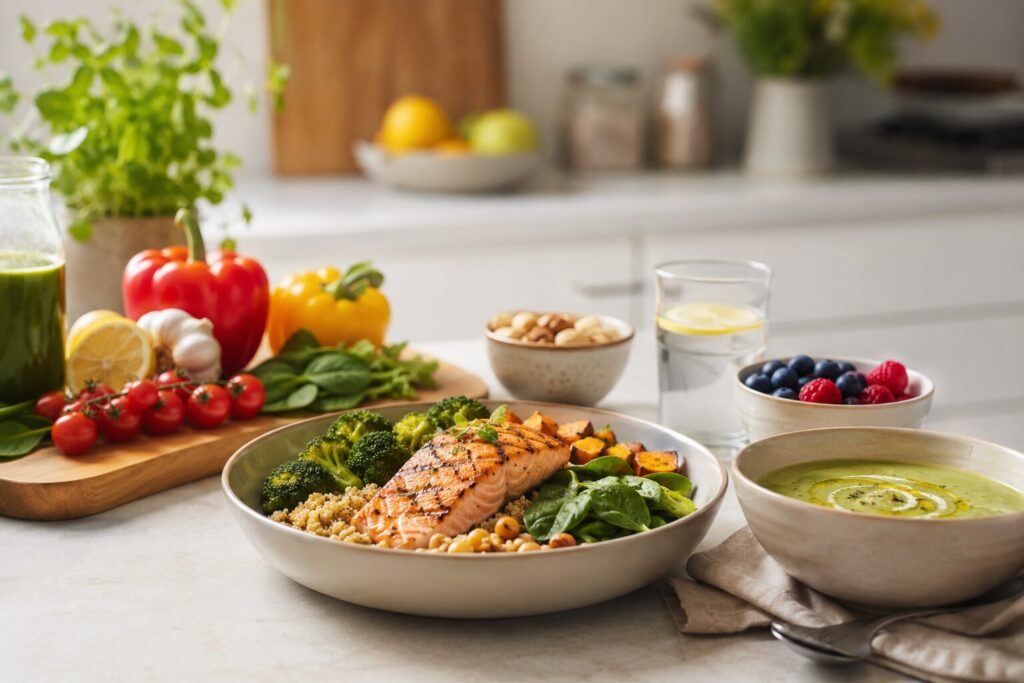

If you’re wondering “how much fibre do women over 40 need”, the simple answer is around 30g of fibre a day, which is the UK recommendation for adults. That target does not suddenly change at 40, but fibre often becomes more important in midlife because it can support digestion, cholesterol, blood sugar balance, fullness and a healthier gut microbiome.
Many women I speak to are eating far less than this, not because they are doing anything wrong, but because modern diets can be surprisingly low in fibre. If breakfast is toast or cereal, lunch is a sandwich and dinner is based around white pasta or rice, it is easy to fall short, even if you feel you are eating quite “normally”.
How much fibre do women over 40 need each day?
The UK guidance is that adults should aim for 30g of fibre per day. The NHS advises that most adults in the UK eat less than this, so reaching 30g is a useful and realistic goal for many women over 40.
When clients ask how much fibre do women over 40 need, I usually explain it like this: 30g is the target, but the best approach is to build up gradually, especially if you are prone to bloating, IBS symptoms or sluggish digestion.
A sudden jump from 12g to 30g can leave you feeling uncomfortable. Fibre absorbs water and is fermented by gut bacteria, so your digestive system often needs time to adapt. A gentler approach might be adding one extra portion of vegetables, swapping white bread for seeded wholegrain or including beans in one meal a few times a week.
Why fibre matters more after 40
Fibre is not just about “being regular”, although healthy bowel movements are a big part of it. After 40, many women notice changes in digestion, energy, weight distribution and cholesterol, particularly during perimenopause and menopause.
Fibre can support several of these areas because it affects how food moves through the gut, how quickly carbohydrate is absorbed and how satisfied you feel after meals. Certain types of fibre also feed beneficial gut bacteria, which produce compounds linked with gut barrier health and inflammation regulation.
This does not mean fibre is a cure-all, and it should not replace medical care where that is needed. But as a daily nutrition foundation, it is one of the most powerful, affordable and practical tools you can use.
What counts as fibre?
Fibre is a type of carbohydrate found in plant foods. Unlike sugars and starches, it is not fully broken down and absorbed in the small intestine. Instead, it travels through the digestive system, helping to add bulk, slow absorption or feed gut bacteria, depending on the type.
There are two main types you will often hear about:
- Soluble fibre: This dissolves in water and forms a gel-like texture. It is found in oats, barley, beans, lentils, apples, pears, flaxseed and chia seeds. It may help support healthier cholesterol and steadier blood sugar.
- Insoluble fibre: This adds bulk to stools and helps food move through the bowel. It is found in wholegrains, wheat bran, nuts, seeds, vegetable skins and many fruits and vegetables.
When considering how much fibre do women over 40 need, it is helpful not to obsess over soluble versus insoluble fibre at every meal. A varied whole-food diet naturally gives you a mixture of both.
If cholesterol is a particular concern, soluble fibre is especially worth focusing on. Oats, beans, lentils and ground flaxseed are simple foods to use regularly, and I’ve written more about soluble fibre foods for cholesterol if you would like a deeper guide.
What does 30g of fibre look like in everyday food?
Thirty grams can sound like a lot until you see how quickly it adds up when meals are built around whole plant foods. You do not need unusual ingredients or complicated recipes. In fact, many traditional foods, such as porridge, vegetable soup, bean stews and baked potatoes with skins, are naturally fibre rich.
Here is a simple example of how a day could reach roughly 30g of fibre. Fibre values vary depending on portion size and brand, so treat these as practical estimates rather than exact numbers.
| Meal or snack | Example | Approximate fibre |
|---|---|---|
| Breakfast | Porridge made with oats, berries and 1 tablespoon ground flaxseed | 9g to 11g |
| Lunch | Lentil soup with wholegrain bread | 10g to 13g |
| Snack | Apple with a small handful of almonds | 5g to 7g |
| Dinner | Chicken or tofu with roasted vegetables, brown rice and chickpeas | 9g to 12g |
This is why the answer to how much fibre do women over 40 need is only half the story. The more useful question is: how can you build fibre into meals you already enjoy, without making your diet feel like a chore?

The best high-fibre foods for women over 40
The best fibre sources are usually the simplest ones: vegetables, fruit, pulses, wholegrains, nuts and seeds. These foods bring fibre alongside vitamins, minerals, polyphenols and plant compounds that support overall health.
Good everyday choices include oats, barley, beans, lentils, chickpeas, peas, berries, pears, apples, carrots, broccoli, sweet potatoes, wholegrain bread, brown rice, quinoa, chia seeds, ground flaxseed, almonds and walnuts.
Pulses are particularly useful in midlife because they provide both fibre and plant protein. If you are trying to feel fuller, support muscle maintenance or manage weight without restrictive dieting, that combination can be very helpful. For easy meal inspiration, these high-protein one-pot bean, lentil and chickpea recipes are a lovely way to make fibre-rich eating feel warming, satisfying and realistic.
Protein matters too, especially after 40. Fibre helps with fullness and gut health, but protein supports muscle, blood sugar balance and recovery. If you are unsure where to start, you may also find my guide on how much protein women over 40 really need useful.
How to increase fibre without bloating
If your gut is sensitive, more fibre is not always better straight away. Some women feel worse when they suddenly add lots of beans, bran or raw vegetables, particularly if they already experience IBS-type symptoms.
A calmer approach is to increase fibre slowly over several weeks. Start with one change and notice how your body responds. You might add berries to breakfast, include one tablespoon of ground flaxseed daily or swap half your white rice for brown rice.
When women ask how much fibre do women over 40 need, I also ask about fluids. Fibre needs water to work comfortably. If you increase fibre but do not drink enough, constipation and bloating can worsen rather than improve.
Cooking vegetables can also make them easier to tolerate than raw salads. Soups, stews, roasted vegetables and slow-cooked pulses are often gentler options. If beans cause wind, start with small portions, rinse tinned beans well and try lentils first, as they are often easier to digest.
Can fibre support weight management in midlife?
Yes, fibre can support weight management, but not in a punishing or restrictive way. High-fibre foods tend to take longer to chew, add volume to meals and help you feel fuller after eating. This can naturally reduce the urge to snack without relying on willpower.
Fibre-rich meals also tend to support steadier blood sugar. For many women over 40, blood sugar swings can show up as afternoon crashes, cravings, irritability or needing something sweet after dinner. Pairing fibre with protein and healthy fats can make meals more satisfying and help energy feel more even.
This is one reason very low-calorie diets often stop feeling workable in your 40s. Your body needs nourishment, not just less food. A bowl of lentil soup with olive oil, vegetables and wholegrain bread may support your goals better than a tiny “diet” lunch that leaves you hungry an hour later.
How do you know if you are not getting enough fibre?
You do not need to track fibre forever, but it can be helpful to check for a few days. Many people are surprised by the gap between what they assume they eat and what they actually reach.
Signs you may be low in fibre include constipation, irregular bowel habits, feeling hungry soon after meals, relying heavily on refined carbohydrates or eating very few plant foods across the day. High cholesterol or blood sugar concerns can also be reasons to look more closely at fibre intake, alongside advice from your GP or healthcare team.
A simple plate check can help. At most meals, ask whether you have included a plant-based fibre source. That could be vegetables, fruit, pulses, wholegrains, nuts or seeds. If the answer is usually no, you have an easy place to start.
When should you be careful with fibre?
Most people benefit from increasing fibre, but there are times when personalised advice is sensible. If you have active inflammatory bowel disease, a bowel narrowing, recent bowel surgery or have been advised to follow a low-fibre diet, do not increase fibre without medical guidance.
You should also speak with your GP if you have blood in your stool, unexplained weight loss, persistent diarrhoea, ongoing abdominal pain, anaemia or a sudden change in bowel habit. These symptoms should always be checked properly.
For women with IBS, the type of fibre can matter as much as the amount. Some high-fibre foods are also high in fermentable carbohydrates, sometimes called FODMAPs, which can trigger symptoms in sensitive people. In that situation, the answer to how much fibre do women over 40 need may need to be personalised, rather than simply aiming for 30g straight away.
Frequently Asked Questions
Is 30g of fibre too much for women over 40? For most women, 30g a day is an appropriate target because it matches UK adult guidance. If you currently eat much less, build up slowly to reduce bloating and discomfort.
What is the easiest way to get more fibre? Start with breakfast. Oats, berries, chia seeds, ground flaxseed or wholegrain toast can add a meaningful amount of fibre before the day gets busy.
Can fibre help with menopause weight gain? Fibre may support fullness, steadier blood sugar and healthier digestion, which can all help with weight management during menopause. It works best alongside enough protein, sleep, stress support and regular movement.
Should I take a fibre supplement? Food should usually come first because fibre-rich foods also provide nutrients and plant compounds. A supplement such as psyllium may be useful for some people, but it is best to check suitability if you take medication or have digestive issues.
Can too much fibre cause bloating? Yes, especially if you increase it quickly or choose foods your gut struggles to ferment. Increase gradually, drink enough water and use cooked vegetables or smaller pulse portions if your digestion is sensitive.
Feel as though your body has changed after 40?
If you’re struggling with your weight, energy, digestion or changing health and aren’t sure what your body needs now, you don’t have to work it out alone.
Throughout September, I’m offering free Midlife Nutrition Reviews. This is an informal 15-minute call to discuss what you’re experiencing, what you’ve already tried and whether personalised nutrition support could help.