
Yes, food can make a real difference for some women, especially when headaches are linked with blood sugar dips, dehydration, alcohol, poor sleep or hormonal fluctuations. Perimenopause headaches and diet are connected because the way you eat can influence these common triggers, although diet will not be the only factor for everyone.
If you have started getting headaches in your 40s, or your usual headaches feel more frequent or intense, it can feel unsettling. Perimenopause can affect sleep, stress tolerance, appetite, mood, caffeine sensitivity and how well your body copes with long gaps between meals. All of these can feed into headaches or migraine-type symptoms.
Food is not a substitute for medical care, especially if your headaches are new, severe or changing quickly. But a steady, nourishing way of eating may help reduce the number of possible triggers your body is juggling, which is often a useful place to start.
Why can headaches become more common in perimenopause?
Perimenopause is the transition before menopause, when oestrogen and progesterone levels begin to fluctuate more unpredictably. For some women, those hormonal changes can affect blood vessels, brain chemistry, sleep quality and sensitivity to pain.
The Migraine Trust explains that hormonal changes can influence migraine, particularly when oestrogen levels rise and fall. Even if you would not describe your headaches as migraine, you may still notice that they cluster around your cycle, after a poor night’s sleep or during stressful weeks.
There may also be more than one trigger at play. A busy day with breakfast skipped, too much coffee, not enough water and a glass of wine in the evening can create the perfect storm. Add perimenopausal hormone fluctuations and your threshold for headaches may feel much lower than it used to.
Perimenopause headaches and diet: what is the connection?
Diet can influence several headache-related factors, including blood sugar balance, hydration, inflammation, magnesium intake, gut health and how well your body copes with stress. This is why a food-first approach can be so helpful, not because one magic food will stop headaches, but because your overall pattern of eating can support a calmer internal environment.
For example, if your meals are mostly toast, cereal, coffee, biscuits and a late dinner, your blood sugar may rise and fall sharply through the day. Those dips can leave you shaky, irritable, foggy and more prone to headaches. If your meals contain enough protein, fibre and healthy fats, your energy is likely to be steadier.
A balanced approach to perimenopause headaches and diet also looks at what might be missing. Many women are eating too little protein at breakfast, not enough mineral-rich foods and not drinking enough fluid, especially when life is busy or sleep has been poor.
Foods that may help support fewer headaches
When I talk about perimenopause headaches and diet with clients, I usually start with steady meals rather than strict rules. You do not need a perfect diet. You need a way of eating that helps your body feel better supported through hormonal change.
Protein at every meal
Protein helps slow the release of glucose into the bloodstream, which can reduce energy crashes. It also supports muscle, mood, immune function and repair. During perimenopause, protein becomes even more important because muscle mass can gradually decline and appetite patterns may change.
Good options include eggs, Greek yoghurt, cottage cheese, fish, chicken, turkey, tofu, tempeh, lentils, beans, chickpeas, nuts and seeds. If you often wake with a headache or feel one building mid-morning, look at breakfast first. A high-sugar breakfast with little protein can leave you running on fumes by 10.30am.
Slow-release carbohydrates
Carbohydrates are not the enemy. In fact, cutting them too low can worsen headaches for some women, especially if they are already stressed, sleeping badly or exercising regularly.
Choose slow-release carbohydrates such as oats, rye bread, quinoa, brown rice, sweet potato, beans, lentils and root vegetables. These provide fibre, B vitamins and minerals, while helping to keep blood sugar more stable than sugary snacks or refined white carbs eaten on their own.
Magnesium-rich foods
Magnesium is involved in muscle relaxation, nervous system function and energy production. Some people with migraine are advised to consider magnesium, but supplements are not always the first step and they are not suitable for everyone.
Food sources are a gentle place to begin. Include pumpkin seeds, chia seeds, almonds, cashews, spinach, black beans, dark chocolate with a high cocoa content and wholegrains. If you are considering supplements, it is best to get individual advice, particularly if you take medication or have a health condition.
Oily fish and healthy fats
Oily fish such as salmon, sardines, mackerel and trout provide omega 3 fats, which support the body’s normal inflammatory response. If you do not eat fish, you can include chia seeds, ground flaxseed, walnuts and hemp seeds, although plant-based omega 3 is converted less efficiently in the body.
Healthy fats also help meals feel satisfying. Avocado, extra virgin olive oil, nuts and seeds can all be useful additions when used in realistic amounts.
Colourful plants and phytoestrogens
A colourful plate brings antioxidants, fibre and plant compounds that support gut and hormone health. Aim for variety rather than perfection: berries, peppers, beetroot, broccoli, leafy greens, carrots, tomatoes, red cabbage and herbs all count.
Some plant foods, including soya beans, tofu, tempeh, edamame, chickpeas and ground flaxseed, contain phytoestrogens. These are natural plant compounds with a gentle oestrogen-like effect in the body. They do not suit everyone, but for many women they can be a useful part of a whole-food perimenopause diet.
If you would like a broader foundation for hormone support, my guide to perimenopause nutrition tips for better hormone balance goes into more detail.
| Food focus | Examples | Why it may help |
|---|---|---|
| Protein | Eggs, fish, Greek yoghurt, tofu, lentils | Supports steadier blood sugar and satiety |
| Magnesium foods | Pumpkin seeds, spinach, almonds, black beans | Supports nervous system and muscle function |
| Slow-release carbs | Oats, quinoa, sweet potato, rye bread | Helps reduce energy dips between meals |
| Healthy fats | Olive oil, avocado, walnuts, oily fish | Supports hormone health and meal satisfaction |
| Hydrating foods | Cucumber, soups, berries, melon, leafy greens | Adds fluid, minerals and plant nutrients |

Hydration matters more than many people realise
Dehydration is a common headache trigger. It can creep in easily during perimenopause, particularly if night sweats, hot flushes, alcohol, caffeine or busy days mean you are losing or forgetting fluids.
Water is ideal, but herbal teas, diluted kefir drinks, soups and water-rich foods can also contribute. If you are drinking lots of plain water but still feeling headachy, tired or light-headed, you may need to look at minerals too. A food-first way to support this is to include vegetables, fruit, beans, lentils, nuts, seeds and a little salt in meals if medically appropriate.
For many women, perimenopause headaches and diet improve most when hydration is paired with regular meals. Drinking more water will not always help if you are under-eating, over-caffeinating or going six hours without food.
Foods and drinks that may make headaches worse
This is not about banning everything enjoyable. It is about noticing your personal pattern. Some women can tolerate coffee and wine perfectly well. Others find their threshold changes during perimenopause.
Common dietary triggers can include:
- Skipping meals or leaving very long gaps between meals
- Too much caffeine, or caffeine withdrawal at weekends
- Alcohol, especially red wine, prosecco or drinking on an empty stomach
- Very sugary snacks eaten without protein or fibre
- Highly processed foods that displace more nourishing meals
- Not eating enough overall, particularly when dieting
The most useful approach to perimenopause headaches and diet is curiosity rather than restriction. If you suspect caffeine is involved, try reducing it gradually rather than stopping suddenly, as caffeine withdrawal can trigger headaches. If alcohol seems to be a trigger, experiment with having it less often, drinking with food and alternating with water.
What might a headache-supportive day of eating look like?
A simple day of eating can be far more effective than an overly complicated plan. You are aiming for meals that contain protein, fibre, colour and healthy fats, with enough fluid through the day.
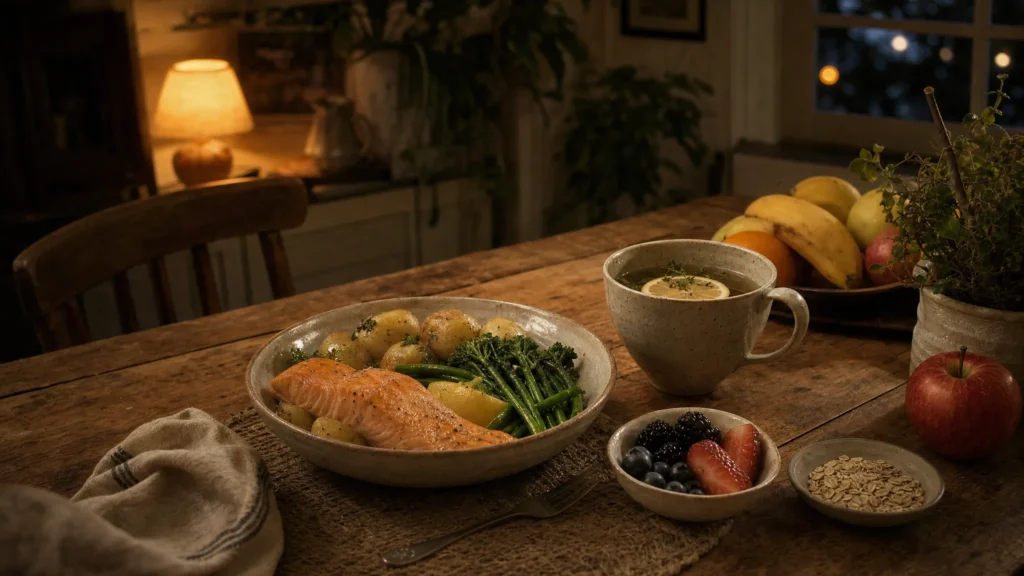
Breakfast might be Greek yoghurt with berries, ground flaxseed and walnuts, or eggs with mushrooms, spinach and rye toast. Lunch could be a lentil and roasted vegetable salad with olive oil dressing, or soup with chicken, beans and wholegrain bread. Dinner might be salmon with sweet potato and greens, tofu stir-fry with brown rice, or a bean chilli with avocado and salad.
Snacks are not always necessary, but they can be helpful if your headaches tend to arrive late afternoon. Try apple slices with peanut butter, oatcakes with hummus, a boiled egg, a small handful of nuts or yoghurt with cinnamon.
A simple way to make perimenopause headaches and diet feel less overwhelming is to focus on your next meal, not your whole week. Ask yourself: where is the protein, where is the fibre and have I had enough to drink?
Keep a headache and food pattern diary
A diary can help you spot links that are hard to see in the moment. You do not need to track calories. Instead, note the timing of headaches, meals, drinks, sleep, stress, your cycle if you still have one and any hot flushes or night sweats.
You might notice headaches after poor sleep, after a high-sugar breakfast, before your period, after wine or on days when lunch disappears into a busy schedule. Patterns usually matter more than one isolated meal.
One of the most helpful parts of personalised work around perimenopause headaches and diet is making sense of these patterns without turning food into another source of stress. If you already feel overwhelmed, a nutrition professional can help you identify the most useful first steps rather than trying to change everything at once.
When should you speak to a GP about headaches?
Please seek medical advice if your headaches are new, worsening, severe or different from usual. You should get urgent help for a sudden, very severe headache, or a headache with symptoms such as weakness, confusion, fever, stiff neck, vision changes, fainting or difficulty speaking. The NHS has clear guidance on headaches and when to get help.
It is also sensible to speak to your GP if headaches are affecting your work, sleep or daily life, or if you are relying on painkillers frequently. Nutrition can sit alongside appropriate medical care, but it should not delay getting symptoms checked.
If brain fog, anxiety or poor sleep are also part of the picture, you may find it useful to read about why perimenopause brain fog happens and what helps, as these symptoms often overlap.
Frequently Asked Questions
Can diet stop perimenopause headaches completely? Diet may help reduce triggers such as blood sugar dips, dehydration and alcohol sensitivity, but it cannot guarantee that headaches will stop completely. Hormones, sleep, stress, medication, medical conditions and genetics can all play a part.
What is the best breakfast for perimenopause headaches? A good breakfast usually includes protein, fibre and healthy fat. Eggs with vegetables, Greek yoghurt with berries and seeds, or porridge with nuts and ground flaxseed are all balanced options.
Can caffeine help or worsen headaches? Caffeine can relieve headaches for some people, but it can also trigger headaches or cause withdrawal headaches if your intake varies. If you want to reduce caffeine, do it gradually and notice how your body responds.
Are headaches a normal part of perimenopause? Headaches can become more common during perimenopause, particularly in women who are sensitive to hormonal fluctuations. However, new, severe or changing headaches should always be checked by a GP.
Do I need supplements for perimenopause headaches and diet support? Not necessarily. Food, hydration, meal timing and sleep habits are often the best starting points. Supplements may be helpful in some cases, but they should be chosen carefully and based on your individual needs.
Feel as though your body has changed after 40?
If you’re struggling with your weight, energy, digestion or changing health and aren’t sure what your body needs now, you don’t have to work it out alone.
Throughout September, I’m offering free Midlife Nutrition Reviews. This is an informal 15-minute call to discuss what you’re experiencing, what you’ve already tried and whether personalised nutrition support could help.
BOOK YOUR FREE MIDLIFE NUTRITION REVIEW: https://www.traceywarrennutrition.co.uk/appointment/