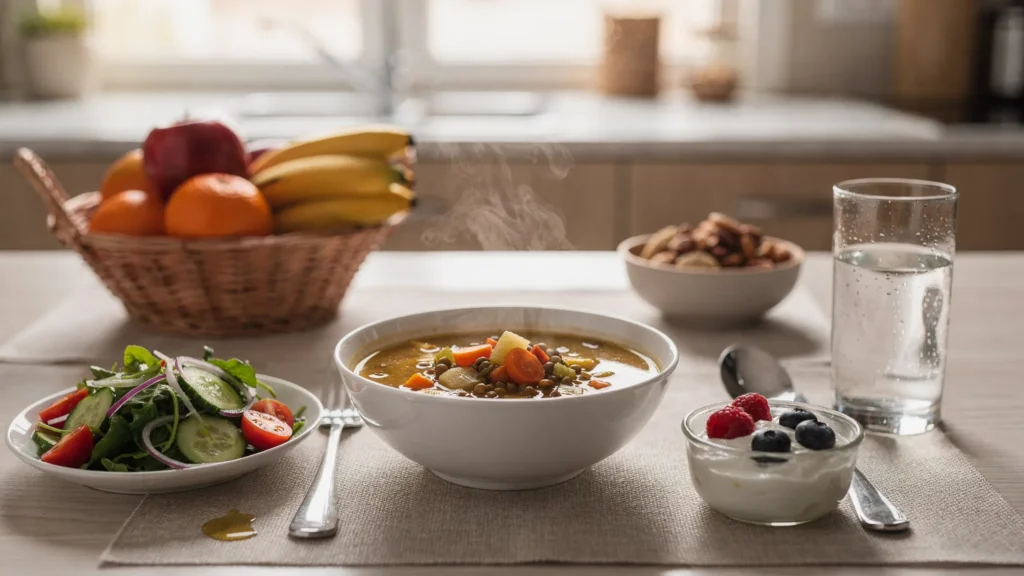

Yes, what you eat may help ease perimenopause-related joint aches by supporting inflammation balance, muscle health and steadier blood sugar. A perimenopause joint pain diet can be as simple as building meals around protein, oily fish or plant omega-3s, colourful vegetables, fibre-rich carbohydrates and healthy fats, while reducing foods that seem to worsen stiffness for you.
Joint pain in perimenopause can feel confusing because it may appear alongside other changes such as poor sleep, hot flushes, weight shifts, mood changes or lower energy. The NHS recognises muscle aches and joint pains as possible menopause symptoms, but it is still worth getting new, severe or persistent pain checked, especially if joints are swollen, hot, red or affecting daily life.
What is a perimenopause joint pain diet?
A helpful eating pattern for sore joints in midlife is not a restrictive diet or a short detox. It is a way of eating that gives your body the nutrients it needs to manage inflammation, repair tissues, maintain muscle and protect bone health as hormones change.
Oestrogen has a role in joint comfort, connective tissue, bone turnover and inflammation signalling. When levels fluctuate during perimenopause, some women notice more stiffness, aching hands, sore knees, hip discomfort or a general feeling of being more “creaky” in the morning.
A perimenopause joint pain diet focuses less on cutting everything out and more on consistently adding the foods your body may be asking for now. For many women, this means more protein at meals, more fibre, more colourful plant foods and more anti-inflammatory fats.
Why can joints ache more during perimenopause?
Changing hormones are one part of the picture, but they are rarely the whole story. Joint pain can be influenced by sleep, stress, inflammation, blood sugar, gut health, weight changes, activity levels and previous injuries.
Poor sleep can make pain feel louder. Stress can increase muscle tension. Skipping meals or relying on quick carbohydrates can lead to blood sugar dips, which may worsen cravings, fatigue and inflammation. If digestion is sluggish or your gut feels unsettled, this can also affect how well you absorb key nutrients.
This is why nutrition support for perimenopause works best when it looks at the whole person, not just one symptom. If you would like a broader foundation for hormone support, my guide to perimenopause nutrition tips for better hormone balance may be a useful next read.
Foods that may help with joint pain in perimenopause
In a perimenopause joint pain diet, the most useful foods tend to be those that support a calmer inflammatory response, better muscle maintenance and more stable energy through the day. You do not need unusual ingredients, expensive powders or a perfect meal plan to begin.
Oily fish and omega-3 fats
Oily fish such as salmon, sardines, mackerel, trout and anchovies provide EPA and DHA, two omega-3 fats linked with inflammatory balance. If you do not eat fish, chia seeds, flaxseed and walnuts provide ALA, a plant form of omega-3, although the body converts it less efficiently.
A practical aim is to include oily fish twice a week if it suits your diet. For plant-based eaters, ground flaxseed stirred into porridge, yoghurt or smoothies can be a simple daily habit.
Colourful vegetables, berries and herbs
Deeply coloured plant foods provide polyphenols, vitamin C, carotenoids and other protective compounds. These nutrients do not work like painkillers, but they can help create a more supportive internal environment for joints, skin, blood vessels and immune health.
Think berries, cherries, leafy greens, red peppers, beetroot, purple cabbage, tomatoes, broccoli and herbs such as parsley, basil and coriander. Frozen fruit and vegetables count too, which is helpful when life is busy.
| Food group | Examples | How it may support joints |
|---|---|---|
| Oily fish | Salmon, sardines, mackerel, trout | Provides omega-3 fats that may support inflammation balance |
| Colourful plants | Berries, peppers, leafy greens, beetroot | Provides antioxidants and vitamin C for connective tissue support |
| Pulses | Lentils, chickpeas, beans | Adds fibre, minerals and steady-release energy |
| Nuts and seeds | Walnuts, chia, flaxseed, pumpkin seeds | Provides healthy fats, magnesium and plant compounds |
| Fermented foods | Live yoghurt, kefir, sauerkraut | May support gut health, which is linked with immune balance |
Protein for muscles and connective tissue
Protein matters more in midlife than many women realise. It supports muscle, collagen repair, immune function and blood sugar stability. When protein is too low, women may feel hungrier, weaker, more tired and less resilient after exercise.
For this reason, a perimenopause joint pain diet should include a source of protein at most meals. Good options include eggs, fish, chicken, turkey, Greek yoghurt, tofu, tempeh, lentils, beans, chickpeas, nuts, seeds and good-quality meat if you eat it.

Nutrients to pay attention to after 40
Joint comfort is closely connected to bone, muscle and connective tissue health. During perimenopause, it is sensible to think about the nutrients that support the wider musculoskeletal system, not just the joints themselves.
Calcium and vitamin D are important for bone health, especially as oestrogen declines. Magnesium supports muscle relaxation, energy production and nervous system function. Vitamin C helps the body make collagen, the structural protein found in skin, tendons, ligaments and cartilage.
Zinc, selenium and iron can also be relevant, particularly if energy is low, periods are heavy or your diet has become limited. Supplements can be helpful in the right context, but they should not replace a strong food foundation. If you are unsure, read more about whether perimenopause supplements really help and why personalisation matters.
The most effective perimenopause joint pain diet is usually one that covers these nutrients through everyday meals first, then uses supplements carefully where there is a genuine need.
Foods and habits that may make stiffness worse
There is no single list of foods that worsens joint pain for every woman. Your personal triggers may be different from someone else’s, which is why I often encourage clients to notice patterns rather than remove whole food groups unnecessarily.
That said, some women feel stiffer or more inflamed when their diet is high in alcohol, sugary snacks, refined carbohydrates, ultra-processed foods or fried foods. These can affect blood sugar, sleep, gut health and inflammation signalling, all of which may influence how joints feel.
A realistic perimenopause joint pain diet does not require you to be perfect. It asks you to be curious. If you suspect wine, biscuits, pastries or takeaway meals are making symptoms worse, try reducing them for two to three weeks and observe what happens to morning stiffness, energy and sleep.
Non-food triggers can matter too. For example, some women notice more headaches, skin sensitivity or sensory changes during perimenopause.
A simple day of eating for sore joints
If you are building a perimenopause joint pain diet, start with your next breakfast rather than overhauling everything overnight. Small changes made consistently are often far more helpful than a strict plan you can only follow for a week.
Here is what a supportive day might look like:
- Breakfast: Greek yoghurt with berries, ground flaxseed, walnuts and cinnamon, or scrambled eggs with spinach and tomatoes on wholegrain toast.
- Lunch: Lentil and roasted vegetable salad with olive oil dressing, pumpkin seeds and a portion of chicken, tofu or feta.
- Dinner: Salmon or bean chilli with vegetables, brown rice or sweet potato and a side of greens.
- Snack if needed: Apple with nut butter, hummus with oatcakes, kefir with berries or a boiled egg with cherry tomatoes.
The goal is not to eat these exact meals every day. It is to notice the pattern: protein, fibre, colourful plants and healthy fats at regular intervals. If you also experience hot flushes, weight changes or low energy, this same balanced approach can be adapted for those symptoms too. You may find my article on menopause nutrition for energy, weight and hormone balance helpful.
What about gluten, dairy, nightshades or sugar?
This is where many women get stuck. They hear that they should cut out gluten, dairy, tomatoes, peppers, coffee, sugar or all carbohydrates, then feel overwhelmed before they even begin.
For some people, specific foods can aggravate symptoms. But broad restriction without a clear reason can leave you low in protein, calcium, fibre or enjoyment, which is not ideal during perimenopause. If you suspect a food is a trigger, it is better to test it in a structured way rather than cut out everything at once.
A perimenopause joint pain diet should leave you feeling nourished, not anxious around food. If removing foods makes your meals smaller, less varied or more stressful, it may not be the right first step.
How quickly might diet changes help?
Some women notice changes in energy, bloating or cravings within a couple of weeks. Joint discomfort can take longer because connective tissue, muscle strength, inflammation patterns and sleep all change gradually.
I usually suggest giving a nutrition change at least four to six weeks before judging it, unless a food clearly makes you feel worse. Keep a simple note of your symptoms, morning stiffness, sleep, stress, bowel habits and movement so you can see patterns more clearly.
The perimenopause joint pain diet that works best for you may need adjusting around your lifestyle, medical history, digestion, activity level and preferences. This is where personalised nutrition can be helpful, especially if you have tried to “eat well” but still do not feel like yourself.
When should you get joint pain checked?
Please do not assume every ache is “just hormones”. Perimenopause can contribute to joint discomfort, but arthritis, autoimmune conditions, thyroid issues, vitamin D deficiency, injury and medication side effects can also play a role.
Speak to your GP or another appropriate healthcare professional if you have:
- Joint swelling, redness or heat
- Severe pain or pain that wakes you at night
- Unexplained weight loss, fever or extreme fatigue
- Sudden weakness, numbness or loss of function
- Pain after an injury or fall
- Symptoms that are getting worse despite self-care
Nutrition can sit alongside medical care, but it should not replace assessment when symptoms are significant or new.
Frequently Asked Questions
Can perimenopause really cause joint pain? Yes, joint aches and muscle pains can happen during perimenopause, partly because oestrogen influences inflammation, connective tissue and bone health. It is still sensible to get persistent, swollen or severe joint pain checked so other causes are not missed.
What is the best breakfast for perimenopause joint pain? A good breakfast includes protein, fibre and healthy fats. Try Greek yoghurt with berries, flaxseed and walnuts, eggs with vegetables on wholegrain toast or tofu scramble with spinach and mushrooms.
Does a perimenopause joint pain diet mean cutting out carbs? No, carbohydrates are not the enemy. The focus is on choosing fibre-rich options such as oats, beans, lentils, brown rice, sweet potato and wholegrains, then pairing them with protein and healthy fats.
Are supplements useful for joint pain in perimenopause? They can be, but it depends on your diet, symptoms, medications and health history. Vitamin D, omega-3, magnesium or collagen may be relevant for some women, but it is best to choose supplements based on individual need rather than guesswork.
Can weight changes make joint pain worse? Weight gain can increase load on some joints, but pain is not only about weight. Muscle strength, inflammation, sleep, stress, nutrient intake and movement all matter, so a supportive plan should be wider than simply eating less.
Feel as though your body has changed after 40?
If you’re struggling with your weight, energy, digestion or changing health and aren’t sure what your body needs now, you don’t have to work it out alone.
Throughout September, I’m offering free Midlife Nutrition Reviews. This is an informal 15-minute call to discuss what you’re experiencing, what you’ve already tried and whether personalised nutrition support could help.