
Post infectious IBS describes ongoing abdominal pain and changes in bowel habits that develop after a gut infection, such as food poisoning or gastroenteritis. Diet may help you manage these symptoms, but there is no single food plan that cures the condition. The aim is to keep you nourished, make eating more comfortable and gradually widen your food choices, rather than cutting out more and more foods.
If your digestion has felt different since a stomach bug, that change deserves attention. You do not have to choose between putting up with symptoms and following a very restrictive diet.
Why do symptoms continue after a stomach bug?
An infection can leave the digestive system more sensitive even after the original illness has passed. Changes in gut movement, immune activity and the community of bacteria living in the bowel may all contribute. The communication between the gut and brain can also become more sensitive, making normal digestive activity feel uncomfortable.
This can lead to bloating, cramping, urgency and loose stools. Some people experience constipation or alternate between different bowel patterns. Symptoms may fluctuate, so a food that feels manageable one day may seem troublesome another day.
These symptoms are real. Stress can influence how the gut behaves, but that does not mean the problem is imagined or that relaxation alone will resolve it.
It is also worth distinguishing ongoing IBS symptoms from the early recovery period after an infection. A few unsettled days do not automatically mean you have developed a long-term condition, and persistent symptoms need medical assessment before being labelled IBS.
When should you seek help for post infectious IBS?
Speak to your GP if digestive symptoms keep returning or are not settling. The NHS guidance on getting an IBS diagnosis advises seeing a GP if you think you have IBS and symptoms have lasted more than four weeks. You should seek advice sooner if symptoms are severe or concerning.
Do not wait four weeks with continuing acute diarrhoea. NHS advice on diarrhoea and vomiting recommends contacting NHS 111 if diarrhoea lasts more than seven days, vomiting lasts more than two days or you cannot keep fluids down.
Symptoms that need prompt medical advice include:
- Blood in your stool or bleeding from your bottom.
- Unexplained weight loss.
- Persistent fever or significant worsening pain.
- Diarrhoea that regularly wakes you at night.
- Signs of dehydration, such as very little urine or ongoing dizziness.
Your GP may arrange blood or stool tests to check for other causes, including coeliac disease, inflammation or an infection that has not cleared. Mention any recent antibiotics or overseas travel. If coeliac testing is being considered, do not remove gluten beforehand, because this can affect the accuracy of the results.
What should you eat while your gut is sensitive?
For post infectious IBS, a useful starting point is regular meals, enough fluid and gradual adjustments based on your symptoms. You do not need to begin with an extensive list of forbidden foods. Make one manageable change at a time so you can see what genuinely helps.
Keep meals regular and manageable
Long gaps without food followed by a large meal can be uncomfortable for a sensitive gut. Try reasonably regular meals and give yourself time to eat without rushing. If larger portions trigger fullness or urgency, smaller meals may be easier to manage.
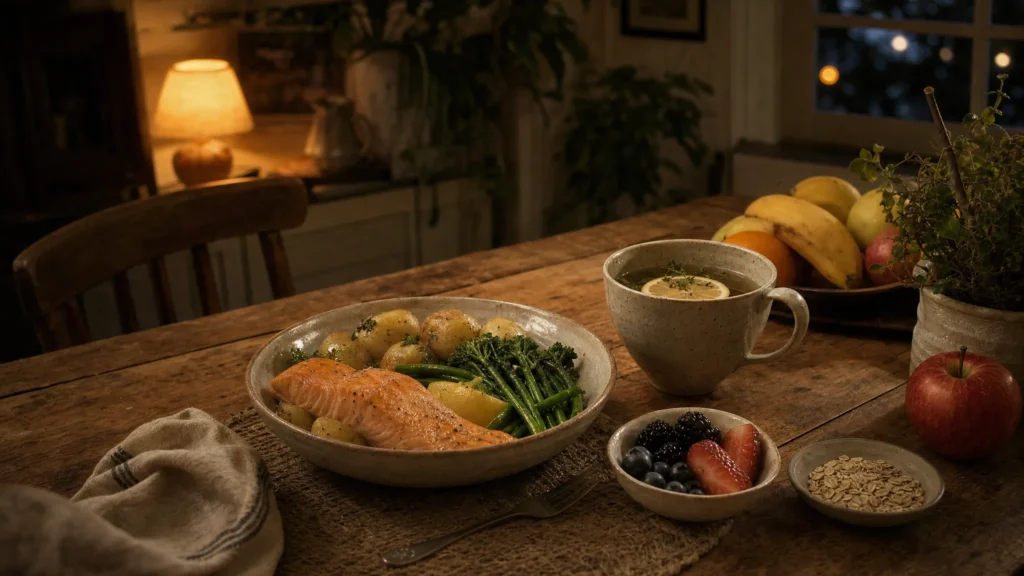
Build meals around a carbohydrate you tolerate, a source of protein and some vegetables or fruit. Rice, potatoes, oats, eggs, fish and cooked vegetables can be useful options, but no food is universally symptom-free.
Very fatty meals, large amounts of alcohol and excess caffeine can aggravate symptoms for some people. You do not necessarily need to avoid them completely. Notice whether quantity and timing make a difference before deciding that a food must go.
Adjust fibre rather than simply adding more
“Eat more fibre” is not always helpful advice when your bowel is already unsettled. The type of fibre and how quickly you increase it matter.
Soluble fibre absorbs water and can help with stool consistency. Oats are one familiar source. Insoluble fibre, found in foods such as wheat bran, can worsen bloating or discomfort in some people with IBS. NICE guidance on IBS management recommends reviewing fibre intake and, where an increase is needed, favouring soluble fibre.
With post infectious IBS, build fibre gradually rather than suddenly adding bran cereals, large salads and several portions of beans. If constipation is your main difficulty, adequate fluid is also important. If diarrhoea dominates, avoid assuming that removing all fibre is the answer.
A fibre supplement such as ispaghula husk may be appropriate for some people, but discuss suitability with a pharmacist or clinician and follow the product directions.
Consider temporary lactose sensitivity
A gut infection can temporarily reduce your ability to digest lactose, the natural sugar in milk. This may cause extra wind, bloating or loose stools after dairy foods. It does not mean everyone needs to stop eating dairy, and it is different from a milk allergy.
If there is a clear pattern, a short trial of lactose-free alternatives may help you assess whether lactose is contributing. Lactose-free milk still provides protein and calcium. Some people also tolerate hard cheeses or yoghurt better than milk, although individual responses vary.
For post infectious IBS, any dairy adjustment should protect your nutrition rather than remove a whole food group without a replacement. If you choose plant-based drinks, look for calcium-fortified options and check their protein content. Once symptoms are steadier, consider a gradual return to your usual dairy foods with appropriate guidance.
Avoid staying on a very limited diet
Plain toast, rice and a few familiar foods may feel reassuring when your stomach is unsettled. However, living on a narrow selection for weeks can make it harder to meet your needs for protein, vitamins and minerals.
Try adding one tolerated food back at a time, in a manageable portion. Cooked carrots or courgettes may be easier for you than a large raw salad, for example. That is a practical adjustment, not a rule that raw vegetables are harmful.
Whole-foods eating can still be gentle. There is no need to force large amounts of fermented foods, beans or raw vegetables because they have been described as “good for the gut”. Comfort and adequate nourishment come first.

Use a low FODMAP diet only when appropriate
FODMAPs are certain carbohydrates that can draw water into the bowel and be fermented by gut bacteria. In a sensitive gut, this may contribute to bloating, pain or changes in stools. A low FODMAP diet can help some people with IBS, but it is not necessary for everyone.
If simpler changes have not helped your post infectious IBS, a structured trial may be worth discussing with a dietitian or practitioner trained in this approach. It should involve a short restriction phase followed by reintroduction and personalisation, not permanent avoidance of every high FODMAP food.
My low FODMAP guide and recipe collection explains the phases and offers practical meal ideas. Portion size matters, and the eventual goal is the widest diet you can comfortably manage.
Avoid combining several restrictive approaches at once. Removing gluten, dairy and all high FODMAP foods together makes it difficult to identify what helps and can leave you unnecessarily limited.
What might a gentle day of eating look like?
The following ideas are starting points, not a prescribed diet or a formal low FODMAP meal plan. Adjust portions and ingredients to your appetite, symptoms and nutritional needs.
| Meal | Possible option | Helpful adjustment |
|---|---|---|
| Breakfast | Porridge made with milk or lactose-free milk | Start with a manageable portion and add fruit you tolerate |
| Lunch | Baked potato with tuna or egg and cooked vegetables | Keep rich sauces modest if fatty meals trigger symptoms |
| Dinner | Rice with fish, chicken or firm tofu and cooked carrots or courgettes | Choose familiar seasoning and adjust vegetable portions |
| Snack | Plain yoghurt, lactose-free yoghurt or a small portion of tolerated fruit | Choose according to your own response rather than a universal “safe” list |
For post infectious IBS, a useful meal plan supports both comfort and adequate intake. If you are hungry, losing weight or struggling to eat enough, making the diet stricter is not the right next step.
Drink regularly throughout the day. With significant fluid loss from diarrhoea, a pharmacist can advise on oral rehydration sachets, which replace water and salts. Persistent diarrhoea still needs medical advice rather than dietary management alone.
How can you work out what actually helps?
A brief food and symptom diary can reveal patterns without turning every meal into a test. For one or two weeks, record meal timing, rough portions, pain or bloating and your bowel pattern. Note sleep, stress and any medicines too, because food is only part of the picture.
Look for repeated patterns rather than blaming the last thing you ate. A difficult day might follow several changes, such as poor sleep, a large meal and extra coffee. Testing one adjustment at a time is more informative than removing five foods together.
When supporting post infectious IBS, I would focus on what you can comfortably include as well as possible triggers. Through my gut health and digestive support, I offer personalised nutrition guidance built around your health, lifestyle and preferences, alongside appropriate medical care.
Regular movement and a consistent sleep routine can also support wellbeing. These are helpful habits, not a suggestion that you caused your symptoms or should be able to think them away.
Frequently Asked Questions
Does post infectious IBS go away? Symptoms can improve over time, but recovery varies. Some people improve over months, while others have symptoms for longer. There is no guaranteed timetable, so keep reviewing your symptoms and seek medical advice if they change or worsen.
Does it mean the infection is still there? Not necessarily. The term describes IBS symptoms that develop after an infection has resolved. However, ongoing diarrhoea can have other causes, so your GP may recommend tests rather than assuming it is IBS.
Should I take probiotics? Probiotics are not essential, and their effects vary between products and individuals. NICE advises that people who choose to try one should use the manufacturer's recommended dose for at least four weeks while monitoring symptoms. Stop and seek advice if it makes you feel worse; no probiotic is a guaranteed cure.
Do I need to avoid gluten? Not automatically. Wheat-related symptoms can sometimes involve its fermentable carbohydrates rather than gluten itself. Discuss coeliac testing with your GP before going gluten-free, and avoid removing gluten while testing is underway unless your clinician advises otherwise.
Feel as though your body has changed after 40?
If you’re struggling with your weight, energy, digestion or changing health and aren’t sure what your body needs now, you don’t have to work it out alone.
Throughout September, I’m offering free Midlife Nutrition Reviews. This is an informal 15-minute call to discuss what you’re experiencing, what you’ve already tried and whether personalised nutrition support could help.
BOOK YOUR FREE MIDLIFE NUTRITION REVIEW and let’s have a chat.