
If you’ve typed “dietician near me” into Google, you’re not alone. Most people are simply trying to answer a practical question: Who can help me make sense of my symptoms, my blood results, my weight, or my food habits, without judgement or fads?
But the search results can be confusing, because in the UK the words dietitian, nutritionist (and sometimes nutritional therapist) are used in different ways, and they don’t all have the same level of regulation.
This guide will help you choose the right professional for your needs, and feel confident about what to look for, whether you want someone local in Cheshire or you’re happy working over video.
First, a quick note on spelling: “dietician” vs “dietitian”
In the UK, the protected professional title is dietitian (spelled with a “t”). Many people still search “dietician” (with a “c”), so you’ll often see both online. They usually refer to the same role, but dietitian is the correct and regulated title.
Dietitian vs nutritionist: the key difference (in plain English)
A good way to think about it is:
- A dietitian is a regulated healthcare professional who can support people medically, often alongside the NHS or private healthcare, including complex clinical diets.
- A nutritionist is a broader term in the UK, and it can range from highly qualified, evidence-led practitioners to people with minimal training.
That’s why it’s less about the label on a website and more about training, registration, and the type of support you need.
Here’s a simple comparison.
| Factor | Dietitian (UK) | Nutritionist / Nutritional therapist (UK) |
|---|---|---|
| Legal regulation | Regulated profession | Not a legally protected title (varies by practitioner) |
| Protected title? | Yes, “Dietitian” is protected and regulated | No, “Nutritionist” is not protected (check credentials carefully) |
| Typical settings | NHS, private clinics, specialist teams | Private practice, corporate wellbeing, clinics |
| Best for | Diagnosed medical conditions and therapeutic diets | Behaviour change, whole-food strategies, lifestyle support, personalised plans |
| Approach | Clinical nutrition and medical dietetics | Can be evidence-led and holistic, depends on training and style |
To verify a dietitian’s registration, you can check the HCPC register (the UK regulator for dietitians) via the Health and Care Professions Council.
When a dietitian is usually the best choice
If your situation is medically complex, a dietitian can be an excellent first step. Dietitians are trained to support medical nutrition therapy and often work directly with healthcare teams.
You may want to prioritise a dietitian if:
- You’ve been diagnosed with a condition where diet is part of medical treatment (for example, kidney disease, coeliac disease, pancreatitis, serious malnutrition, complex gastrointestinal disease)
- You need support with tube feeding or specialist clinical nutrition
- You have diabetes and need structured medical guidance (particularly if you’re on certain medications)
- You have a history of an eating disorder or very complex relationship with food and need specialist clinical input
- You’re under hospital care, awaiting investigations, or your GP has recommended a referral
If you’re unsure, the NHS also explains what dietitians do and when they may be involved in care: see the NHS overview of dietitians.
A helpful mindset: “Do I need clinical management or wider support?”
Sometimes people assume they must see a dietitian because their symptoms feel serious, but what they actually need is:
- A clear structure for meals
- Help balancing blood sugar and energy
- A plan they can stick to (especially around stress, sleep, perimenopause, or busy family life)
Those needs can be very appropriate for a qualified nutritionist or nutritional therapist.
When a nutritionist may be the right fit
A well-qualified nutritionist can be brilliant for people who want practical, whole-food changes that are tailored to real life, not perfection.
In practice, many people searching “dietician near me” are looking for help with things like:
- Stubborn weight gain, cravings, or “I eat well but nothing shifts”
- Menopause or perimenopause symptoms (energy, sleep, mood, hot flushes, body composition changes)
- Digestive discomfort (bloating, reflux, constipation, irregular bowels)
- Fatigue, low mood, brain fog
- High cholesterol or blood pressure support alongside medical care
- Recovery and resilience after treatment, where nourishing the body matters
A naturopathic or functional-style nutritionist will often take a more whole-person view, looking at patterns like:
- Meal balance (protein, fibre, healthy fats)
- Gut health foundations (including tolerance, symptoms, and routine)
- Blood sugar stability
- Stress physiology and sleep habits (because they affect appetite and metabolism)
- Food quality and consistency, rather than strict dieting
This is also where you’ll often get more ongoing coaching, recipe and meal ideas, and help troubleshooting what’s getting in the way.
If you’re in Cheshire and want that kind of support, Tracey offers personalised naturopathic nutrition plans and can work with you in person around Nantwich or via video call nationwide. If you’d like to explore whether it’s a fit, you can start with a free call via the 15-minute consultation option.
Can you see both a dietitian and a nutritionist?
Yes, and for some people it’s a great combination.
For example:
- You might work with a dietitian for a specific medical condition, then work with a nutritionist to build long-term habits, enjoyable meal structure, and lifestyle routines that support your goals.
- You might begin with a nutritionist to improve day-to-day symptoms and consistency, while you’re waiting for medical investigations.
The best practitioners (dietitians and nutritionists alike) will stay in their lane, encourage appropriate GP input, and support you safely.
And sometimes, health challenges come with broader life admin too. If your situation involves workplace adjustments, insurance, or other non-health decisions, it can help to get proper professional guidance in those areas as well. For example, you might seek legal advice from Henlin Gibson Henlin if you need support navigating a legal matter alongside everything else you have going on.
How to choose the right “dietician near me” (or online) without wasting time
Because titles can be confusing, focus on these practical checks.
1) Check registration and training
- If they’re a dietitian, look for HCPC registration (you can verify it on the HCPC register).
- If they’re a nutritionist, look for a credible training background and reputable voluntary registration where applicable.
In the UK, “Registered Nutritionist” can refer to a practitioner on the Association for Nutrition register. You can learn more about the role and register via the Association for Nutrition.
2) Look for an approach that matches your personality
Ask yourself:
- Do I want a clinical plan focused on medical targets?
- Or do I need practical, supportive coaching that helps me actually implement change?
Neither is “better”, but the fit matters.
3) Avoid red flags
Be cautious if you see:
- Promises to cure conditions
- Overly restrictive plans with long lists of “never foods”
- Expensive supplement protocols without clear rationale
- A lack of safeguarding, or no mention of working alongside medical care when needed
4) Ask a few simple questions before you book
A quick phone call or enquiry can save a lot of frustration. Useful questions include:
- “What types of clients do you work with most often?”
- “How do you personalise a plan?”
- “What happens after the first session, do you offer follow-up support?”
- “How do you work alongside my GP or consultant if needed?”
What to expect from your first appointment
While every practitioner works slightly differently, most first appointments include:
- A thorough history (health concerns, medications, sleep, stress, digestion, lifestyle)
- Discussion of your goals and what “success” realistically looks like
- A plan that focuses on a few high-impact changes first
A dietitian appointment may lean more heavily on:
- Medical history, blood results, diagnosis-driven targets
- Therapeutic diet implementation
A nutritionist appointment may lean more heavily on:
- Meal structure, food quality, habits, routines
- Symptom patterns (energy dips, cravings, bloating triggers)
- “Doable” changes that build momentum, rather than perfection
Whichever route you choose, you should leave feeling clearer, not overwhelmed.
A local note for Cheshire: you don’t always need to travel
Many people searching “dietician near me” really mean, “I want someone who understands my context and can support me properly.”
If you live in or around Nantwich, Crewe, Chester, Sandbach, Northwich, Congleton, Wilmslow, Macclesfield (or anywhere in Cheshire), you may have both options:
- In-person support, if you prefer face-to-face conversations
- Video consultations, which can be just as effective for nutrition work and often fit better around work and family life
It can also be a lovely bonus to work with someone who appreciates local rhythms and food culture, from seasonal produce to farm shops and weekend routines. The best plan is always the one that fits your real life.
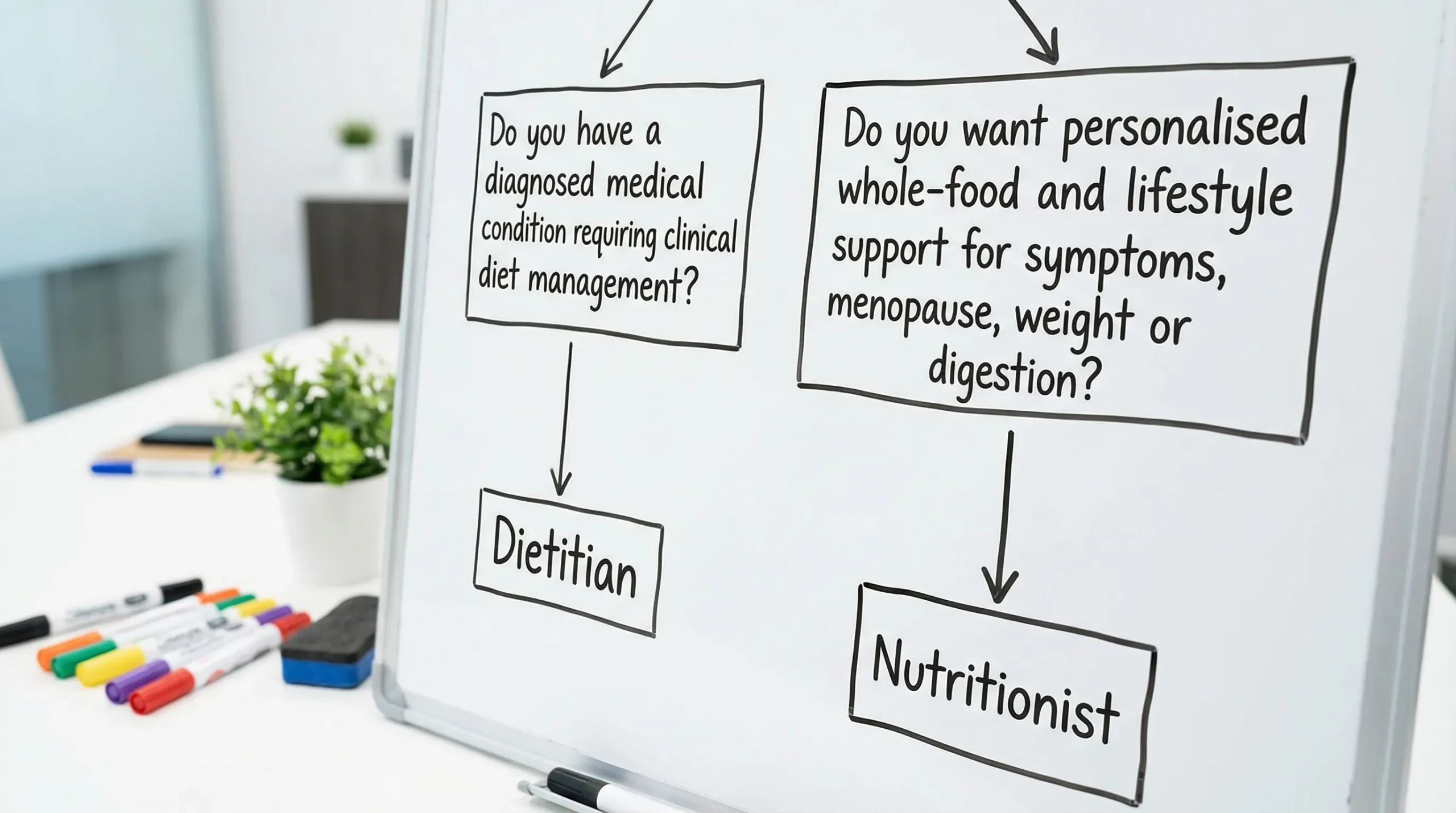
The simplest way to decide
If you want a quick decision shortcut:
- Choose a dietitian if your primary need is clinical management of a diagnosed condition, especially if you’re under hospital care or need a therapeutic diet.
- Choose a qualified nutritionist if you want personalised, sustainable support for habits, symptoms, and day-to-day wellbeing, and you’re ready to work on food and lifestyle in a realistic way.
If you’re not sure which is best for you, that’s completely normal. A short conversation can usually clarify it.
If you’d like support, here’s a gentle next step
If you’re looking for a warm, practical approach to food that still respects the science (and doesn’t involve punishing diets), you’re welcome to get in touch with Tracey Warren Nutrition. You can book a free 15-minute consultation to talk through your goals and see what kind of support would suit you best via Tracey Warren Nutrition.