

Workplace wellbeing can feel like a “nice-to-have” until sickness absence rises, deadlines slip, and half the team is running on caffeine and adrenaline. In reality, the best corporate wellness programmes are practical, inclusive, and designed for real working days, not perfect ones.
If you’re looking for corporate wellness ideas for UK teams that actually work, this guide focuses on what makes the biggest difference to absenteeism, stress, menopause support, energy and focus, and mental health and mood, without turning wellbeing into another job on someone’s to-do list.
Why corporate wellness matters (and why “free fruit” isn’t enough)
Absenteeism is the obvious cost, but it’s not the only one. Many businesses are hit harder by presenteeism, where people are technically at work but running at 50 percent capacity due to poor sleep, stress, pain, low mood, brain fog, or hormonal symptoms.
In the UK, work-related stress is consistently one of the biggest drivers of lost working days. The Health and Safety Executive (HSE) reports that stress, depression or anxiety account for a large proportion of work-related ill health and working days lost in Great Britain each year, highlighting the scale of the issue for employers and employees alike (HSE work-related stress statistics).
That doesn’t mean employers can “fix” health problems. It does mean that workplaces can reduce friction, support healthier choices, and create a culture where people are more likely to feel steady, focused, and able to cope.
What makes workplace wellbeing initiatives stick
The corporate wellness ideas that create lasting change tend to share a few traits:
They are designed around the real causes of poor energy and low mood
Energy and focus aren’t just about motivation. They’re strongly influenced by:
- Blood sugar swings (the classic 3pm slump)
- Poor sleep (often stress-related, sometimes hormone-related)
- Dehydration
- Low protein and fibre at meals
- Nutrient gaps (iron, B12, vitamin D, magnesium can all play a role)
- Lack of movement and daylight
When you target the drivers, you get better results than generic “be healthier” messaging.
They are inclusive, especially around menopause
Menopause symptoms can impact sleep, temperature regulation, mood, confidence, joint comfort, and concentration. Supporting menopause at work is not a niche perk, it’s a retention and performance issue.
If you want a credible starting point for policy and culture, the NHS provides a helpful overview of menopause and work considerations (NHS: Menopause at work).
They are easy to access and low effort to maintain
A wellbeing initiative that requires constant policing, complicated tracking, or “perfect compliance” tends to fade fast. Think: small changes, repeated consistently.
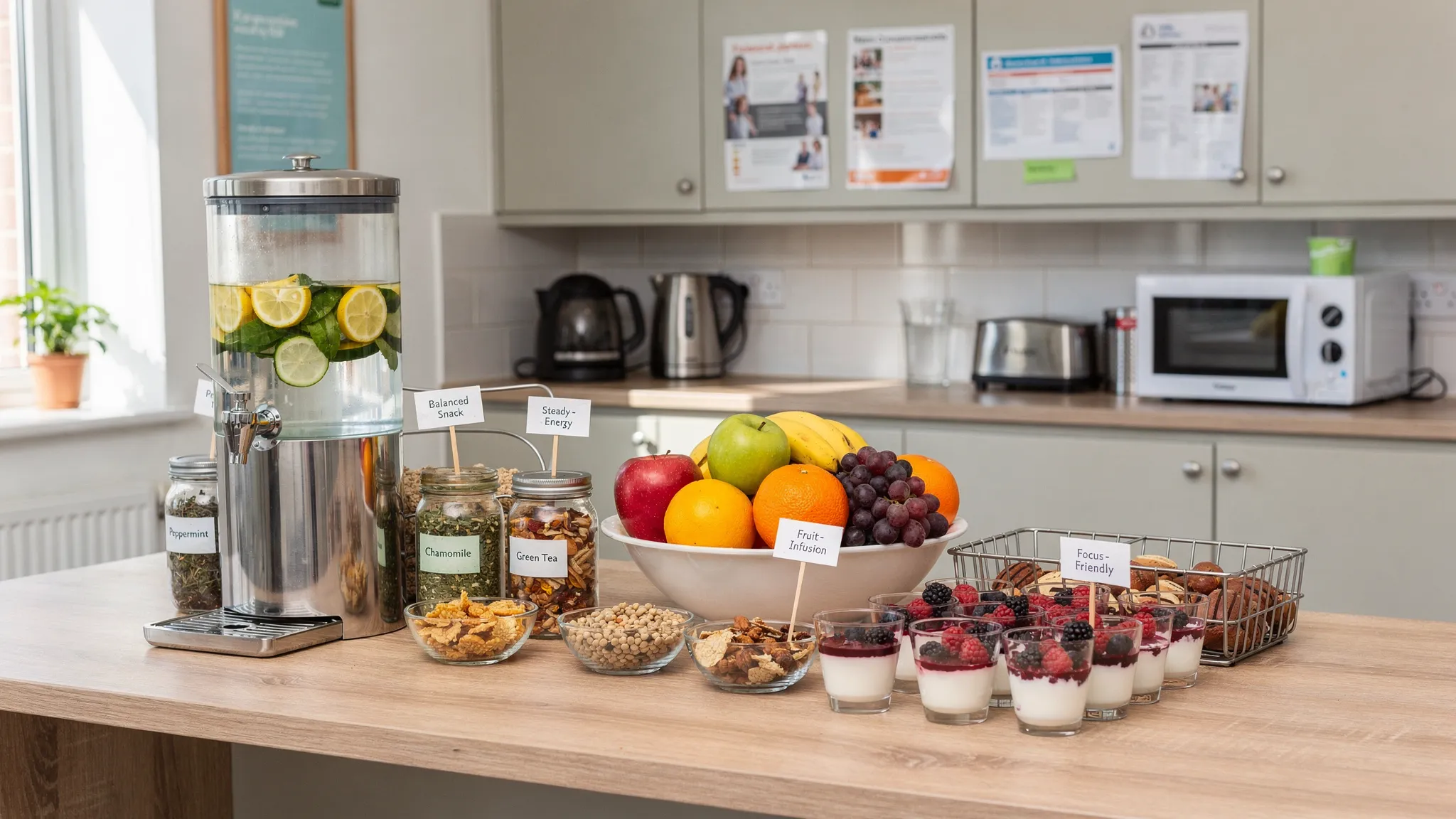
Corporate wellness ideas for UK teams that work (practical and evidence-informed)
Below are ideas you can use as a menu. You do not need all of them. Choose a few that match your team’s needs and build from there.
1) Reduce the 3pm slump: energy and focus supports that are actually doable
If your team struggles with afternoon fatigue, concentration dips, or snack cravings, start here. These are usually quick wins.
Upgrade the workplace snack environment
You don’t need to ban biscuits (and I wouldn’t recommend trying). You can simply make it easier to build a steadier snack.
Examples that support steadier energy:
- Mixed nuts and seeds
- Fruit plus yoghurt or cheese
- Oatcakes with nut butter
- Hummus with oatcakes or chopped veg
- Microwavable wholegrain rice with tinned fish or lentils (great for “I forgot lunch” days)
Make meetings “brain-friendly”
If you regularly cater meetings or training days, a few small tweaks can make a noticeable difference to attention and mood:
- Include a protein option (eggs, yoghurt, chicken, tofu, beans, fish)
- Include fibre-rich carbs (wholegrain wraps, oatcakes, fruit, veg soups)
- Keep sugary pastries as optional, not the only choice
- Put water on the table by default, not just hot drinks
Encourage a protected lunch break (even if it’s short)
A 20-minute lunch away from the desk, ideally with a short walk and daylight, can support alertness and stress resilience. If lunch is regularly swallowed in meetings, it’s worth treating that as a productivity issue, not a personal failing.
2) Stress support that goes beyond mindfulness posters
Stress is not just emotional, it’s physiological. When stress is constant, people are more likely to experience cravings, disrupted sleep, digestive symptoms, low mood, and poor concentration.
Normalise micro-recovery breaks
A realistic target for busy teams is 2 to 3 minutes every hour. This can be as simple as standing, breathing slowly, refilling water, or stepping outside for daylight.
Even when workloads cannot change overnight, this supports regulation of the nervous system and can improve focus.
Make “boundaries” a leadership behaviour
If managers routinely send late-night emails, skip lunch, or expect instant replies, wellbeing initiatives will struggle.
Two small cultural shifts that help:
- Agree a “response-time norm” (for example, urgent only by phone)
- Protect focus time with fewer meetings and clearer priorities
Offer practical support alongside emotional support
EAPs and mental health resources are valuable, but many people also need help with the basics that underpin resilience: food, sleep, movement, and nervous-system regulation.
A nutrition session that explains stress and energy in plain language can be surprisingly empowering, especially when it focuses on realistic habits rather than perfection.
3) Menopause-inclusive wellness: a retention and performance win
Menopause support at work is one of the most overlooked corporate wellness opportunities.
Practical menopause-friendly ideas:
- Train managers to have supportive, non-awkward conversations (and to signpost appropriately)
- Review temperature and ventilation where possible
- Ensure easy access to cold drinking water
- Build flexibility into start times after poor sleep
- Offer wellbeing sessions that include menopause, energy, mood, and body composition changes without shame or diet culture
From a nutrition perspective, menopause support often includes:
- Prioritising protein at meals (for muscle, appetite and blood sugar stability)
- Supporting fibre and gut health (which can influence inflammation and mood)
- Including omega-3 fats and colourful plants (for heart health and inflammation balance)
- Reviewing caffeine and alcohol habits kindly and realistically
These changes may help women feel more in control of symptoms like fatigue, cravings, low mood, and brain fog.
4) Mental health and mood: food, routine, and the gut-brain connection
Mental health is complex and never “just” about food. But nutrition and daily routines can meaningfully support mood and emotional steadiness.
Common workplace drivers of low mood and anxiety include:
- Skipped meals and blood sugar crashes
- Too much caffeine and not enough water
- Ultra-processed lunches that don’t keep people full
- Poor sleep routines
- Digestive discomfort (bloating, reflux, IBS symptoms)
Research increasingly recognises the two-way relationship between digestive health and mental wellbeing (often called the gut-brain axis). Supporting regular meals, fibre diversity, and stress regulation can be a helpful foundation alongside appropriate clinical care.
If your wellbeing programme includes physical health too, it can also be helpful to signpost colleagues to evidence-informed musculoskeletal care options when pain is contributing to stress or poor sleep. Some people explore integrated approaches such as chiropractic, physiotherapy and acupuncture. Here’s an example of a clinic model that combines these services, which can help you understand what “integrated care” can look like: integrative musculoskeletal care options.
5) Reduce absenteeism by focusing on the biggest drivers
Absence is rarely caused by one thing. It’s often the build-up of poor sleep, high stress, low resilience, and recurring niggles.
What helps most is a programme that addresses:
- Stress load and recovery (culture, not just coping tools)
- Steady energy (food environment, hydration, breaks)
- Inclusion (especially menopause, neurodiversity, caring responsibilities)
- Movement and ergonomic basics
A simple way to choose the right ideas: impact vs effort
Here’s a practical planning table I often recommend to avoid doing lots of “wellbeing stuff” that doesn’t move the needle.
| Initiative | Effort to implement | Likely impact on energy, mood and absence | Notes |
|---|---|---|---|
| Water and hydration prompts (access + culture) | Low | Medium | Often improves headaches, fatigue and focus quickly |
| Balanced snack upgrades | Low to medium | Medium | Reduces cravings and afternoon crashes |
| Menopause awareness session + manager guidance | Medium | High | Supports retention, confidence and sleep-related performance |
| Meeting catering guidelines | Medium | Medium to high | Improves attention on training days and reduces post-lunch dips |
| Micro-break culture (2 to 3 minutes/hour) | Medium | High | Supports stress regulation and productivity |
| Regular wellbeing workshops with practical habit support | Medium | High | Builds ongoing behaviour change without blame |
A realistic 30-60-90 day rollout plan
If you’re starting from scratch, this phased approach keeps things manageable.
First 30 days: listen and remove friction
Run a short anonymous pulse survey asking what most affects people’s energy, stress, and ability to focus. Keep it simple.
Then implement 1 to 2 visible changes (for example, water access, better snack options, protected lunch norms).
Next 60 days: add targeted support
Choose one theme based on the survey:
- Stress and sleep
- Energy and focus
- Menopause support
Offer a practical workshop and provide a one-page takeaway people can actually use.
By 90 days: measure and refine
Look at:
- Absence patterns (even simple trends)
- Employee feedback and engagement
- Manager observations (focus, afternoon fatigue, morale)
Keep what works, drop what doesn’t, and plan the next theme.
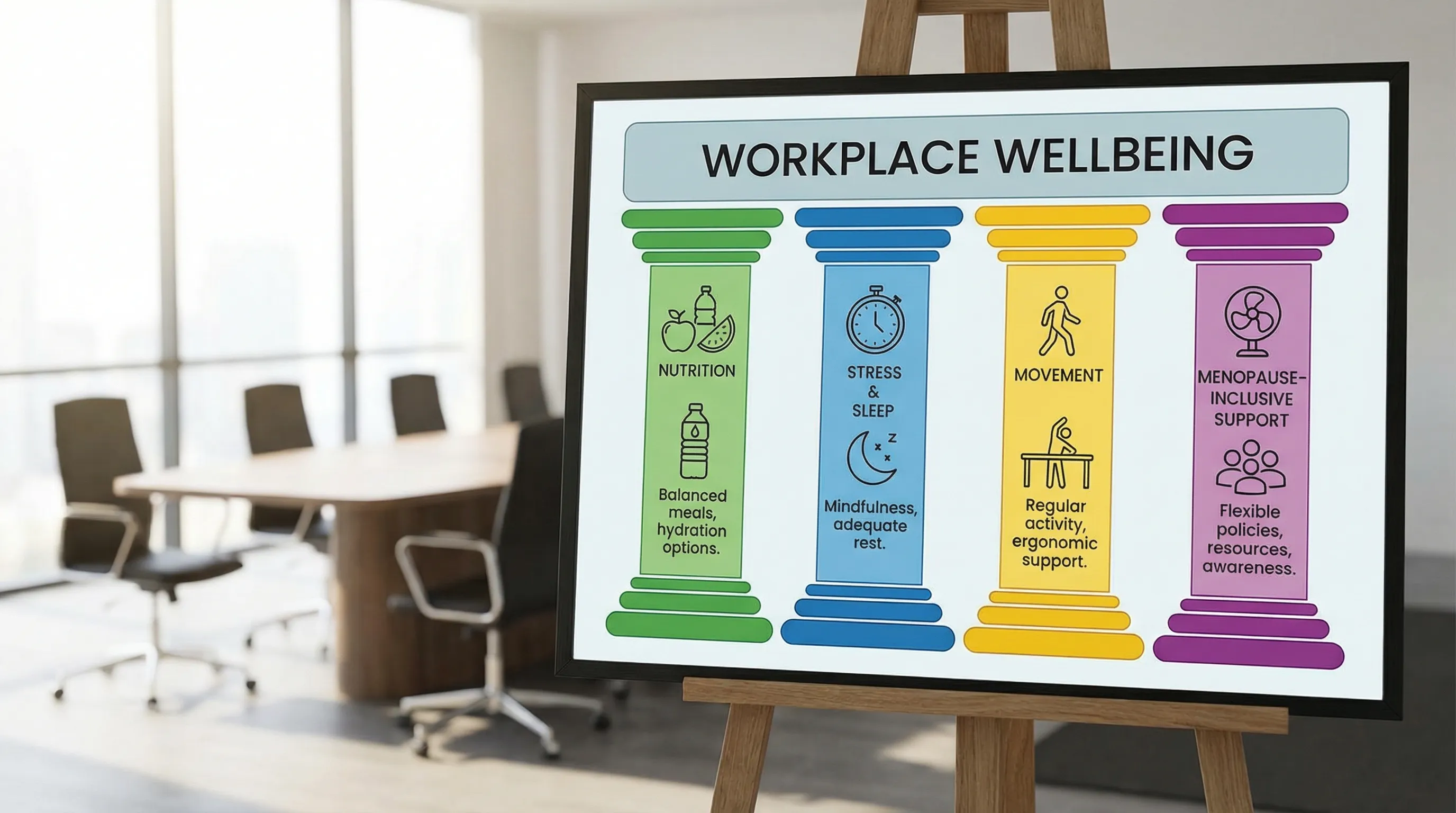
Where nutrition-led workplace wellbeing fits in
Nutrition is not a “silver bullet”, but it’s one of the highest leverage areas because it influences energy, focus, cravings, mood, sleep quality, and long-term health behaviours.
If you’d like structured support for your team, I share options for talks, workshops and workplace support here: corporate nutrition and workplace wellbeing. It’s designed to be practical, inclusive, and appropriate for real-world workplaces.
Frequently Asked Questions
What are the best low-cost corporate wellness ideas for UK teams? Start with high-impact basics: water access, better snack options, protected lunch breaks, and short wellbeing sessions focused on energy and stress.
How can corporate wellness help reduce absenteeism? By addressing common drivers of absence like chronic stress, poor sleep, low energy, and menopause-related symptoms, wellness initiatives can support resilience and reduce repeated short-term sickness.
How do you support menopause in the workplace without making it awkward? Focus on education and normalisation, train managers to respond sensitively, offer flexibility where possible, and include menopause in wellbeing topics like sleep, stress and energy.
Can nutrition really improve focus and mood at work? Nutrition can support steadier blood sugar, better nutrient intake, and gut health, all of which may help with energy, concentration and mood, alongside appropriate medical and mental health support.
How do we measure whether a workplace wellbeing programme is working? Use a mix of simple metrics (absence trends, engagement) and feedback (pulse surveys, manager observations). Track one or two indicators consistently rather than lots of measures once.
A gentle next step
If you’re planning workplace wellbeing support, or you’re not sure which ideas will suit your team best, you’re very welcome to get in touch. I offer a free 15-minute consultation to talk through what you need and what would be realistic to implement. Sessions and support can be delivered locally in Cheshire or nationwide via video call.