
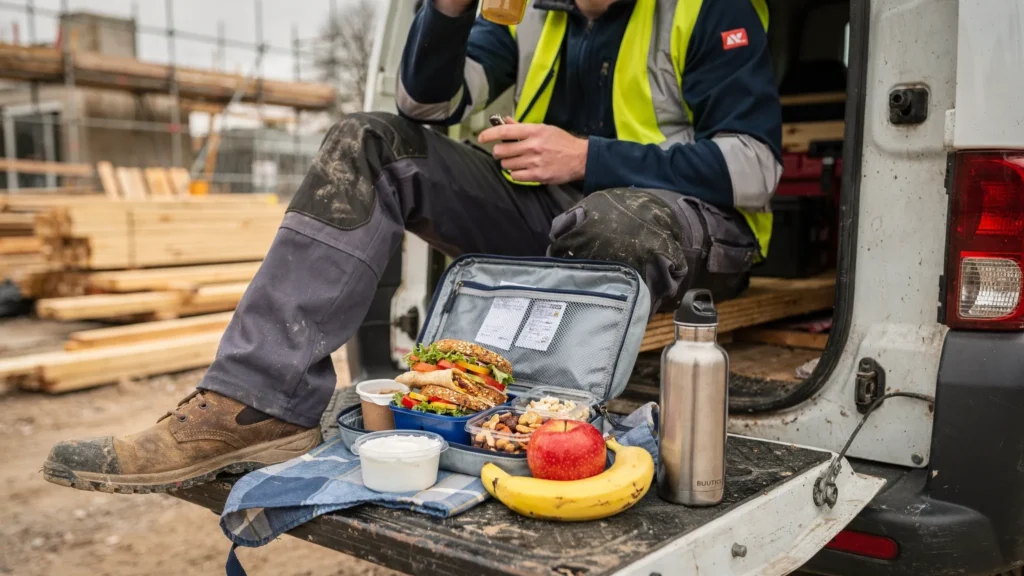
If you’re a UK tradesperson, you’re asking a lot of your body and brain, often from the moment you wake up. Early starts, heavy lifting, long drives, cold mornings, tight deadlines, and “just grab something quick” lunches can all add up to that familiar pattern: a decent burst of energy… then a mid-morning dip… and the dreaded 3pm slump.
The good news is that energy for tradespeople is rarely about “more willpower” (or another can of something fizzy). It’s usually about a few simple nutrition and hydration upgrades that keep your blood sugar steadier, support muscle recovery, and reduce the need for constant caffeine top-ups.
Why your energy crashes (even if you feel like you’re eating all day)
Most energy dips on site come down to one (or a combination) of these:
- Blood sugar swings: a breakfast of toast/biscuit/energy drink can spike blood sugar, then drop it fast.
- Not enough protein early in the day: you feel full briefly, then hungry and shaky later.
- Low fibre: quick carbs digest quickly and don’t keep you going.
- Dehydration: even mild dehydration can impact concentration and perceived energy.
- Caffeine timing: lots of caffeine late in the day can affect sleep, which then affects tomorrow’s energy.
- Under-fuelling: skipping meals (or eating too little) then overeating later.
Here’s a simple way to match the cause to the fix.
| What’s happening | Common signs | What helps most |
|---|---|---|
| Blood sugar spike then crash | Sleepy after lunch, cravings for sweet snacks, irritable | Add protein + fibre to breakfast and lunch, plan a proper snack |
| Dehydration | Headache, “fuzzy” brain, fatigue, constipation | Water early, then steady intake, include hydrating foods |
| Low protein | Hungry soon after eating, snacking all day, slow recovery | Aim for a decent protein portion at breakfast and lunch |
| Too much caffeine (or too late) | Wired but tired, poor sleep, anxious, energy dips | Cap caffeine, avoid late afternoon, swap in non-stimulant options |
| Poor sleep routine | Reliance on coffee, low mood, sugar cravings | Earlier caffeine cut-off, balanced evening meal, consistent bedtime |
If you’re doing the basics and still feel wiped out most days, it’s also worth considering common issues like low iron, B12, vitamin D, thyroid problems, sleep apnoea, or chronic stress. In that situation, a chat with your GP and some basic blood tests can be really helpful.
The “steady energy” plate (a simple formula that works on site)
You don’t need perfection, you need a repeatable structure.
Try building meals around:
- Protein (keeps you full, supports muscles): eggs, chicken, tuna, Greek yoghurt, cottage cheese, lentils, tofu
- Fibre-rich carbs (slower release): oats, wholegrain bread/wraps, brown rice, quinoa, potatoes with skin, beans
- Colour (micronutrients for energy metabolism): fruit, salad, veg sticks, frozen veg
- Healthy fats (satiety and steady fuel): olive oil, nuts, seeds, avocado
When you hit protein + fibre together, you’re far less likely to crash.
Breakfast that actually works for early starts
A trades-friendly breakfast should be quick, portable (if needed), and protein-forward.
A few realistic options:
- Overnight oats made with milk or yoghurt, plus chia seeds and berries (grab from the fridge)
- 2 to 3 eggs (boiled, scrambled, or in a wrap) plus fruit
- Greek yoghurt pot with a handful of oats/granola and a banana
- Leftovers (yes, really): last night’s chilli or chicken and rice can be an amazing “builder’s breakfast”
If breakfast is a struggle, start by changing just one thing: add protein. Even adding a yoghurt or a boiled egg alongside your usual breakfast can make a noticeable difference.
Lunch without the 3pm slump
The classic slump often comes from a lunch that is mostly refined carbs (meal deal sandwich, pasty, crisps) with not much protein or fibre.
A better target is:
- A palm-sized protein
- At least one fist of veg or fruit
- A fist of slower carbs
- A thumb of healthy fats
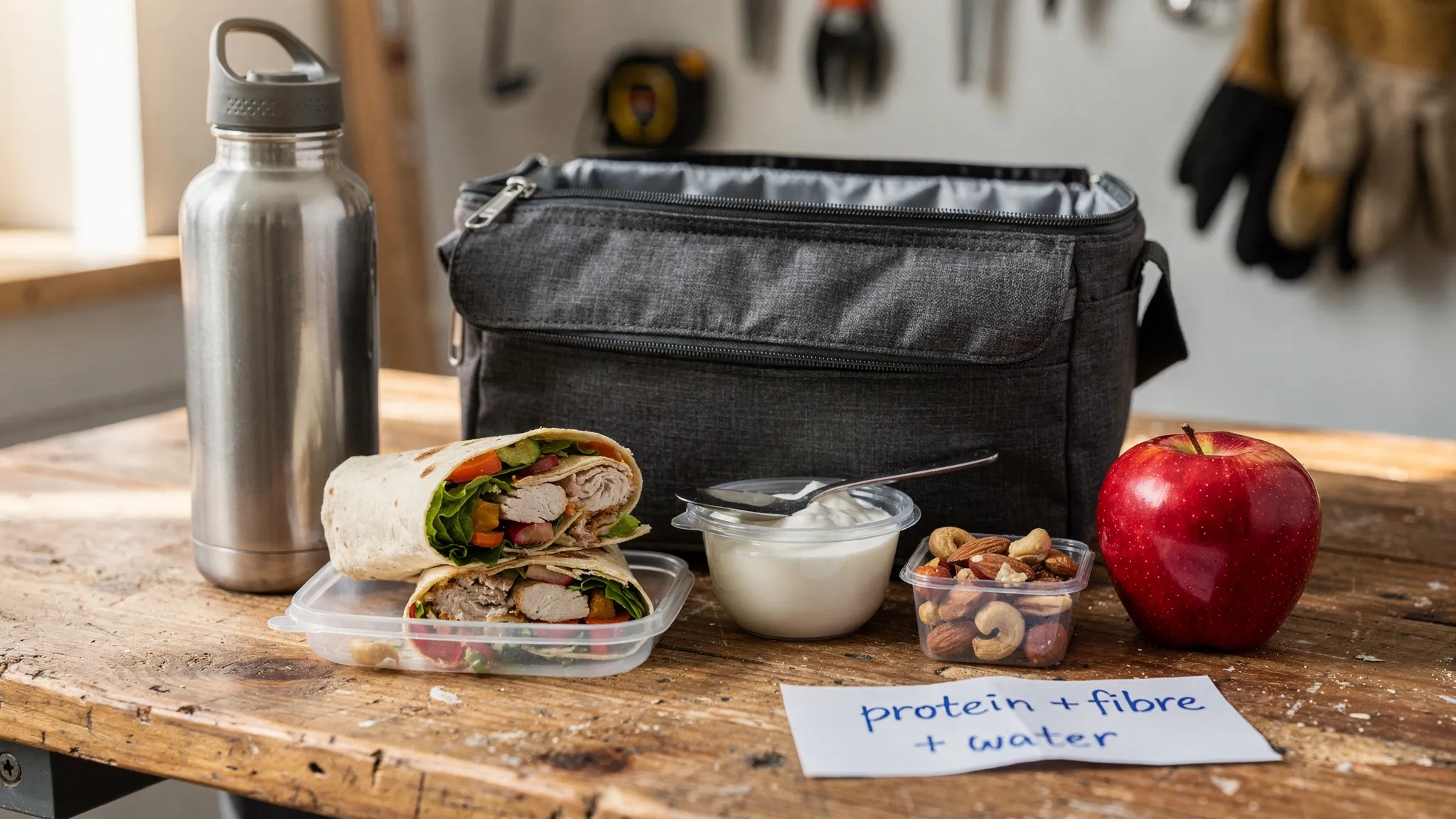
That could look like a chicken salad wrap with extra chicken, plus an apple and a handful of nuts, or a tuna and bean salad with a wholegrain roll.
A quick note on meal deals
Meal deals can be made to work if you build them intentionally. For example:
Choose a higher-protein main (chicken, tuna, egg), add a fruit pot or veg snack, and pick water or milk rather than a sugary drink. It’s not about being “good”, it’s about staying fuelled.
Smart site snacks (so you’re not at the mercy of the petrol station)
Snacking is not the enemy. The goal is to snack in a way that stabilises energy rather than chasing quick hits.
A good on-site snack usually has protein or fibre (ideally both). A simple “site snack kit” might include:
- Mixed nuts or nuts plus a piece of fruit
- Beef jerky or biltong (watch the salt if you have blood pressure concerns)
- Protein yoghurt drink
- Oatcakes plus cheese
- Hummus pot with carrots/cucumber
- A banana plus peanut butter
If you notice you always crash at the same time (often late morning or mid-afternoon), plan a snack 60 to 90 minutes before that dip.
Caffeine: how to use it, not rely on it
Caffeine can be a useful tool, but it works best with a bit of strategy.
A few guiding principles:
- Drink water before coffee (especially first thing)
- Avoid caffeine too late if sleep is a struggle
- Pair coffee with food if you’re prone to jitters or reflux
For a helpful reference on caffeine, the NHS overview of caffeine is a good starting point.
What to use instead of energy drinks
I’m often asked exactly this: what to use instead of energy drinks when you need a boost but don’t want the crash.
Energy drinks are a double-whammy for many people because they can be high in caffeine and sugar (or very sweet flavourings that keep cravings going). They can also become a habit that masks the real issue: under-fuelling and dehydration.
Try one of these instead:
| If you usually reach for… | Try this swap | Why it helps |
|---|---|---|
| Energy drink first thing | Water first, then coffee with breakfast | Hydration plus steadier energy from food |
| Energy drink at 11am | Protein snack + fruit + water | Supports blood sugar and focus |
| Energy drink at 3pm | Decaf tea or sparkling water + proper snack | Reduces the “wired” feeling and protects sleep |
| Energy drink for “something fizzy” | Sparkling water with lemon/lime | Keeps the habit, drops the sugar |
If you genuinely love the ritual of cracking open a can, keep the ritual but change the contents. You’re not failing, you’re upgrading.
(And for what it’s worth, I see the same patterns in other busy, on-the-go jobs too, from nurses to elopement videographers who can be filming from sunrise to sunset.)
Hydration that’s practical (not obsessive)
Hydration is one of the fastest ways to improve energy and concentration, and it’s often overlooked.
A simple approach:
- Start the day with water (even a few big mouthfuls helps)
- Keep a bottle visible in the van or at your workstation
- Aim for pale yellow urine most of the time (very dark suggests you need more fluids)
Do you need electrolytes?
Sometimes, yes. If you’re sweating a lot (hot weather, heavy PPE, physically demanding days), electrolytes can help. But many people do well with:
- Water plus regular meals
- A pinch of salt and a squeeze of citrus in water (if appropriate for you)
- Soups, stews, and hydrating foods like fruit
If you have high blood pressure, kidney issues, or you’re on medication, it’s best to get personalised advice before using high-sodium electrolyte products regularly.
A simple “site day” energy game plan
If you want a straightforward structure, try this on a normal working day:
Morning: breakfast with protein + water before (or alongside) coffee.
Mid-morning: planned snack if you tend to dip.
Lunch: protein + fibre, not just beige carbs.
Mid-afternoon: snack and fluids, then keep caffeine minimal if sleep is a priority.
Evening: a proper meal with protein and vegetables to support recovery (and reduce late-night snacking).
You can repeat this with different foods all week. Consistency beats complexity.
If you’re in Cheshire: make it easier with local food wins
If you’re local to Nantwich and the surrounding Cheshire area, one of the nicest ways to make healthy eating feel less like a chore is to keep it simple and seasonal.
Think:
- Eggs, yoghurt, and lean proteins that you’ll actually use
- Seasonal veg you can roast in one tray (and add to lunches)
- Apples, berries, carrots, and cucumbers as easy grab-and-go options
Even one better shop per week can set you up for steadier energy on site.
Want a done-for-you approach? Start here
If you’re nodding along but you want the exact meals, swaps, and grab-and-go ideas laid out for you, you’ll probably love my Tradesperson’s Nutrition Plan. It’s designed for real working days, not perfect schedules.
You can read it here: The Tradesperson’s Nutrition Plan
Frequently Asked Questions
How can I stop the 3pm slump at work? The most effective fix is usually lunch with enough protein and fibre (not just a quick carb hit), plus a planned snack and better hydration. If sleep is poor, bring caffeine earlier in the day and reduce it later.
What’s a good high-energy breakfast for tradespeople? A protein-based breakfast tends to work best: eggs, Greek yoghurt, overnight oats with added seeds, or even leftovers. The goal is steady energy, not a sugar rush.
What to use instead of energy drinks on site? Try water first, then coffee with food, and use protein snacks plus fruit for a lift without the crash. Sparkling water with citrus can replace the fizzy habit.
How much water should I drink during a workday? There’s no perfect number for everyone, but a practical guide is aiming for pale yellow urine most of the time and increasing fluids on hot days or when sweating heavily.
When should I see my GP about tiredness? If fatigue is persistent (weeks to months), affecting daily life, or comes with symptoms like breathlessness, dizziness, low mood, or changes in bowel habits, it’s worth speaking to your GP and asking about blood tests.
A gentle next step (if you want personalised support)
If you’d like help building a plan around your schedule, your appetite, and the reality of site life, I offer a free 15-minute consultation. We can talk through what’s currently happening with your energy, and what small changes are likely to make the biggest difference.
You can explore working with me at Tracey Warren Nutrition (in Cheshire or via video call nationwide), and we’ll take it from there.