

Menopause brain fog can feel oddly unsettling. One minute you’re fine, the next you’re walking into a room and forgetting why, losing words mid-sentence, or rereading the same email three times. If that’s you, you’re not imagining it, and you’re not alone.
Brain fog in perimenopause and menopause is common, and it’s usually multi-factorial. Hormone shifts can play a part, but so can sleep disruption, stress, blood sugar swings, low iron or B12, and even dehydration. The good news is that food choices can genuinely support clearer thinking, steadier energy, and better mood.
“Why can’t I think straight lately? Is this just menopause?”
Fluctuating oestrogen (and progesterone) can influence several brain-related processes, including how we use glucose (your brain’s main fuel), inflammation levels, and neurotransmitters involved in mood and focus. But in clinic, I often find brain fog is rarely just “one hormone thing”. It’s more like a perfect storm:
- Broken sleep (night sweats, waking at 3am, restless legs, stress)
- More stress load and higher cortisol
- Skipped meals, rushed lunches, “beige” snacks, then a sugar crash
- Under-eating protein (very common in busy women)
- Low iron or low vitamin B12 (especially with heavy periods in perimenopause, or low animal foods)
- Less movement and less time outdoors (both matter for brain function)
If your brain fog has come on suddenly, is severe, or comes with symptoms like confusion, one-sided weakness, fainting, chest pain, or significant low mood, please speak to your GP urgently. Nutrition can be powerful, but it should complement appropriate medical support.
For a helpful overview of menopause symptoms and support options, you might also like the NHS menopause guidance.
“So what should I eat to feel sharper and more ‘with it’?”
Think of your “clear thinking plate” as having four foundations:
- steady blood sugar, 2) enough protein, 3) anti-inflammatory fats, and 4) key micronutrients for the brain.
1) “Could my brain fog just be a blood sugar rollercoaster?”
It’s very possible. When blood sugar rises quickly (think sweet cereal breakfast, toast-only meals, biscuits at 3pm), it often drops quickly too. That dip can feel like:
- fuzzy thinking
- irritability or anxiety
- shaky or lightheaded feelings
- intense cravings
What helps: build meals around protein, fibre, and healthy fats.
A simple rule that works well in menopause is:
Protein + colour (veg/fruit) + fibre-rich carbs + healthy fats
Examples:
- Porridge made with milk or soy milk, plus Greek yoghurt or protein-rich skyr, berries, and chia seeds
- Eggs on sourdough with spinach and tomatoes, plus a drizzle of olive oil
- Lentil and vegetable soup with a side of seeded crackers or a small baked potato
- Salmon, new potatoes, and a big mixed salad
If you want a deeper menopause-focused food strategy (energy, weight, and hormone balance), this guide is a great next read: menopause nutrition, what to eat for energy, weight and hormone balance.
2) “Why do I feel mentally slower when I’m eating ‘light’?”
In perimenopause and menopause, many women accidentally under-eat protein, especially at breakfast and lunch. Protein provides amino acids, which are building blocks for neurotransmitters, and it also supports steadier blood sugar and muscle maintenance.
A practical target many women do well with is 25 to 35g protein per meal, but it varies based on your size, activity, and goals.
If you want help estimating your personal needs, Tracey has a useful tool here: How much protein do you need?
3) “Are there specific foods that support brain health in menopause?”
Yes. You don’t need perfection, but certain nutrients show up again and again in brain and mood support.
Here’s a simple guide you can screenshot.
| What to prioritise | Why it matters for brain fog | Food sources (UK-friendly) |
|---|---|---|
| Omega-3 fats (EPA/DHA) | Supports brain structure and may support mood and cognitive function | Salmon, sardines, mackerel, trout (2 portions oily fish weekly is a helpful goal) |
| Choline | Supports memory and neurotransmitter production | Eggs (especially yolks), soy foods, legumes |
| Magnesium | Supports nervous system regulation, sleep, stress response | Pumpkin seeds, nuts, beans/lentils, wholegrains, dark chocolate, leafy greens |
| B vitamins (especially B12, folate, B6) | Support energy metabolism and neurotransmitters | B12: meat, fish, eggs, dairy, fortified plant milks; Folate: leafy greens, beans |
| Iron | Low iron can contribute to fatigue and poor concentration | Red meat, lentils, beans, spinach (pair plant iron with vitamin C foods) |
| Polyphenols | Antioxidant and anti-inflammatory support | Berries, extra virgin olive oil, cocoa, colourful veg, green tea |
| Fibre and fermented foods | Supports the gut-brain axis | Oats, beans, lentils, veg, nuts/seeds; yoghurt/kefir, sauerkraut (if tolerated) |
For evidence-based food patterns that support overall health (including brain health), the British Dietetic Association is a reliable UK source.
4) “What about phytoestrogens, do they help brain fog?”
Phytoestrogens are plant compounds that can have gentle oestrogen-like effects in the body. They’re not the same as HRT, but they can be a supportive addition for some women, especially as part of a whole-foods diet.
Food sources include:
- flaxseed (ground)
- soy foods (tofu, edamame, tempeh, soy milk)
- chickpeas and lentils
If you’ve been avoiding soy because you’ve heard conflicting messages, you’re not alone. In most cases, whole soy foods can be part of a healthy menopause diet, but personal history matters, so do check with your clinician if you’ve been advised otherwise.
“What should I eat on a normal day when I need my brain to work?”
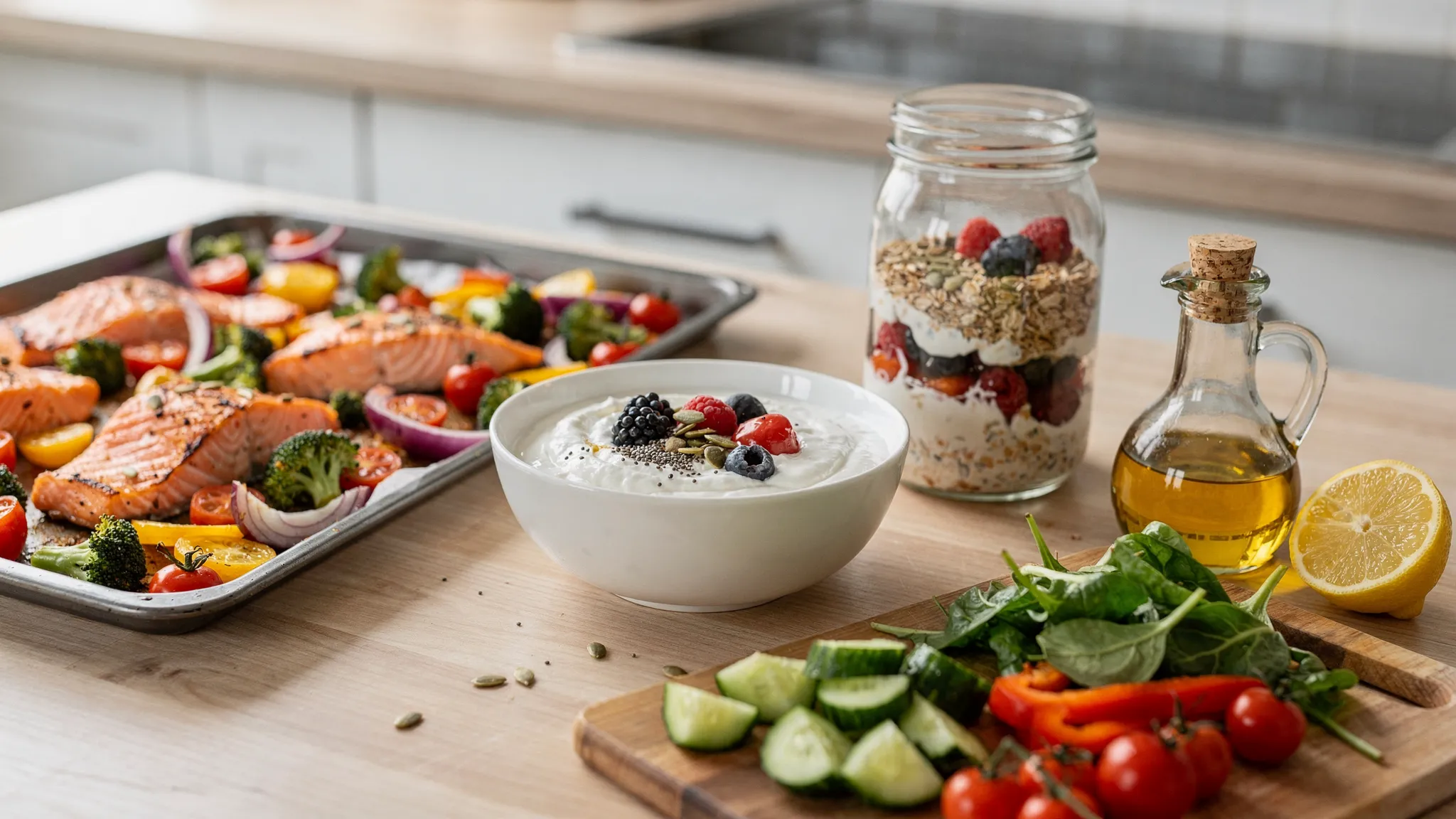
Here’s a realistic “think clearly” day you can adapt. No fancy ingredients, just solid foundations.
| Time | Meal idea | Why it helps |
|---|---|---|
| Breakfast | Greek yoghurt (or soy yoghurt) + berries + oats + chia or ground flax | Protein + fibre + omega-3 (ALA) supports steady energy |
| Lunch | Tuna or chickpea salad bowl: mixed leaves, cherry tomatoes, cucumber, olive oil, seeds, wholegrain pita | Protein + healthy fats + colour, less afternoon slump |
| Snack | Apple + peanut butter, or oatcakes + hummus, or a boiled egg | Helps avoid the “hangry brain fog” dip |
| Dinner | Salmon (or tofu) + roasted veg + quinoa or potatoes | Omega-3s (or plant protein) plus minerals and fibre |
| Evening | Herbal tea, or warm milk/fortified plant milk with cinnamon | A gentle wind-down for sleep support |
“What should I stop eating if I want less brain fog?”
This is where I stay practical rather than strict. You don’t need to ban foods, but you might experiment with reducing what makes brain fog worse.
Ultra-processed, high-sugar snacks (especially on an empty stomach)
If you start the day with something sweet and low in protein, it often sets up a day of cravings and crashes.
Try a swap rather than a removal:
- Instead of toast-only, add eggs, cottage cheese, peanut butter, or smoked salmon
- Instead of biscuits at 3pm, try yoghurt and berries, nuts and fruit, or hummus and oatcakes
Alcohol (especially if sleep is fragile)
Alcohol can make you feel sleepy initially, but it tends to worsen sleep quality and night waking. If your brain fog is tightly linked to poor sleep, even a short break from alcohol can be revealing.
Too much caffeine (or caffeine too late)
Caffeine can be helpful, but if anxiety, palpitations, or 3am wake-ups are part of your menopause picture, consider a “caffeine curfew” (for example, no coffee after late morning) and ensure you eat before your second cup.
“Is my brain fog actually a sleep problem?”
Often, yes. Sleep is one of the biggest drivers of memory, attention, and word-finding. If night sweats, stress, or restless sleep are present, nutrition can support sleep quality by:
- keeping evening meals balanced (not too light, not sugar-heavy)
- including magnesium-rich foods daily
- avoiding big blood sugar swings
- reducing alcohol and late caffeine
If symptoms like hot flushes and night sweats are significantly affecting your quality of life, it’s worth discussing options with your GP. The British Menopause Society is also a trusted UK resource.
“Do I need supplements for menopause brain fog?”
Sometimes supplements are helpful, but I prefer to start with food, routine, and any obvious gaps (protein, iron, omega-3 intake, hydration). If brain fog is persistent, it can also be appropriate to speak to your GP about blood tests, particularly if you have fatigue too.
Common checks that may be relevant (discuss with your GP) include:
- iron status (ferritin)
- vitamin B12 and folate
- vitamin D
- thyroid function
- blood glucose/HbA1c if blood sugar issues are suspected
If you’d like to explore reputable options, you can browse Tracey’s recommended resources (helpful if you’re trying to avoid random internet supplements).
“What can I do this week that will genuinely make a difference?”
If you’re feeling overwhelmed, start here. These are small changes that often create noticeable shifts quickly.
Eat protein at breakfast, even if it’s simple
A few easy options:
- yoghurt + berries + seeds
- eggs (boiled counts) + toast + fruit
- protein smoothie with milk or soy milk, plus oats and frozen berries
Add omega-3s twice a week
Oily fish is the most direct route. If you don’t eat fish, we can look at alternatives, but don’t underestimate how helpful this one change can be.
Make lunch “non-negotiable”
Brain fog is worse when you’re running on coffee and adrenaline. A proper lunch helps your afternoon focus more than you might expect.
Hydrate like it matters (because it does)
Mild dehydration can affect concentration and mood. Keep a bottle visible, and aim for pale straw-coloured urine as a simple guide.

When it’s time to get personalised support
If you’re trying all the “healthy things” and still feel foggy, it may be time for a tailored plan. As a naturopathic nutritionist (and a hormone nutritionist for many women navigating perimenopause and menopause), Tracey looks at the full picture: food, blood sugar patterns, gut health, sleep, stress load, and any nutrient gaps that could be keeping you stuck.
If you’d like a gentle, personalised starting point, you can book a free 15-minute consultation with Tracey to talk through what’s going on and what support might look like. Visit Tracey Warren Nutrition to get in touch or arrange your call.