
If you’re in perimenopause or menopause and thinking, “Why do I feel like a different person?”, you’re not imagining it. Shifts in oestrogen and progesterone can affect sleep, mood, appetite, muscle mass and even how steady your blood sugar feels day to day.
The good news is that menopause nutrition can be genuinely supportive. Not in a strict, joyless way, and not with miracle foods, but with a few simple priorities that help you feel more like you again: steadier energy, less snackiness, and a body that feels more predictable.
Below is a realistic guide to what to eat for energy, weight support and hormone balance, written in the way I’d explain it to a client.
“Why am I suddenly exhausted during menopause?”
Fatigue in menopause is rarely just one thing. It is often a mix of:
- Poorer sleep (night sweats, waking at 3am, anxiety spikes)
- More blood sugar dips (especially if breakfast is light or you’re running on coffee)
- Increased stress load (and higher cortisol)
- Lower iron, B12 or vitamin D (common, and worth checking with your GP)
Nutrition can’t replace sleep, but it can make your energy more stable.
What to eat when you’re running on empty
Aim for meals that include protein + fibre + healthy fats. This combination slows digestion and helps prevent the “wired then wiped out” pattern.
A few easy wins:
- Protein at breakfast: eggs, Greek yoghurt, tofu scramble, protein smoothie, or leftovers (yes, really)
- Fibre at every meal: oats, berries, beans, lentils, veg, wholegrains
- Healthy fats: olive oil, nuts, seeds, avocado, oily fish
If you want a practical target, my protein calculator can help you estimate a daily protein range and a per-meal goal, which is often where women start noticing better energy and fewer cravings.
A note on iron and B12
If your tiredness is persistent, it’s sensible to speak to your GP about blood tests (iron/ferritin, B12, folate, vitamin D, thyroid). This is especially important if you feel breathless, light-headed, or your exercise tolerance has dropped.
You can also check the NHS overview of menopause symptoms for context and what’s considered common: the NHS menopause page is a useful starting point.
“Why is my weight creeping up even though I’m eating the same?”
This is one of the most frustrating menopause experiences, and it’s also very common.
A few physiology points (in plain English):
- Muscle naturally declines with age, and oestrogen changes can make that more noticeable. Less muscle can mean you burn slightly fewer calories at rest.
- Sleep disruption and stress can increase hunger hormones and cravings.
- Alcohol tolerance often changes and evening drinks can quietly nudge weight up (and worsen sleep and hot flushes).
This is why I rarely recommend “eat less, move more” as the main strategy. In menopause, the better approach is usually:
- Eat enough protein to protect muscle
- Build meals around fibre-rich plants
- Stabilise blood sugar (so you’re not fighting cravings all day)
- Strength train (even twice weekly helps)
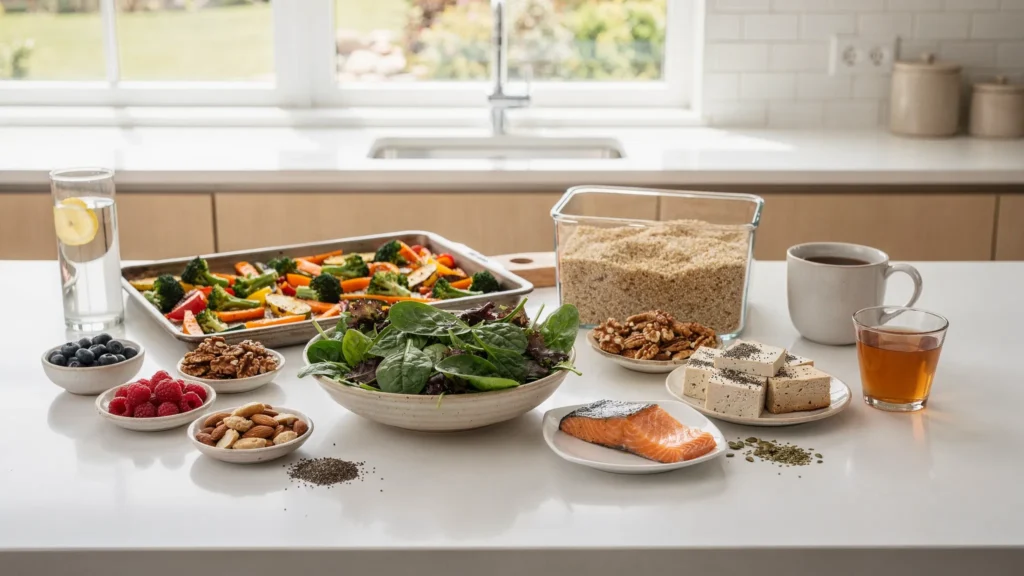
The menopause plate (a simple visual)
Here’s a structure that works for many women without calorie counting:
- 1/2 plate: non-starchy veg (and some fruit across the day)
- 1/4 plate: protein (fish, poultry, eggs, tofu/tempeh, beans/lentils, Greek yoghurt)
- 1/4 plate: fibre-rich carbs (new potatoes with skins, oats, quinoa, brown rice, wholegrain bread)
- Plus: a thumb of healthy fats (olive oil, nuts, seeds)
This style of eating can support weight management while keeping energy and mood steadier.
If weight loss has become particularly stubborn, you might also like my local-focused read: Why am I not losing weight? A nutritionist in Nantwich explains.
“Do I need to cut carbs to balance my hormones?”
Not usually.
Some women feel better reducing refined carbs (white toast, biscuits, sugary cereal), especially if hot flushes and sleep are worse after sugar and alcohol. But cutting carbs too hard can backfire by:
- Increasing cravings and evening snacking
- Making workouts feel harder
- Reducing fibre intake (which matters hugely for gut health and cholesterol)
A menopause-friendly approach is carb quality and timing, rather than “no carbs”.
Choose carbs that work with your body
Think:
- Oats, quinoa, brown rice, wholegrain sourdough
- Beans, lentils, chickpeas
- New potatoes (skin on), sweet potato
- Fruit paired with protein (apple with nuts, berries with yoghurt)
And if your digestion is sensitive, you might need a gentler fibre build-up. I cover that step-by-step in my gut support content, including low-FODMAP guidance when appropriate.
“What should I actually eat in a day to feel like myself again?”
Most women don’t need perfection, they need repeatable, satisfying defaults.
Here’s a simple day that supports energy, weight and hormone balance.
| Time | Menopause-supportive option | Why it helps |
|---|---|---|
| Breakfast | Greek yoghurt, berries, ground flaxseed, chopped nuts | Protein + fibre + healthy fats for steady morning energy |
| Lunch | Big salad bowl: salmon or chickpeas, mixed leaves, roasted veg, olive oil dressing, quinoa | Omega-3s (if oily fish), fibre, minerals, blood sugar stability |
| Snack (if needed) | Apple + peanut butter, or hummus + oatcakes, or a boiled egg + cherry tomatoes | Prevents the 3pm crash and supports appetite control |
| Dinner | Chicken/tofu/tempeh stir-fry with mixed veg, sesame/olive oil, and brown rice | Protein for muscle, colourful veg for antioxidants and gut support |
| Evening | Herbal tea, or magnesium-rich snack if hungry (pumpkin seeds, yoghurt) | Can support relaxation and reduce “kitchen grazing” |
If you want more plug-and-play ideas, my Nutrition Guidance for Real Life: A Weekday Game Plan is designed exactly for busy lives.
“Which nutrients actually matter in menopause (and where do I get them)?”
This is where menopause nutrition can feel empowering, because the targets are clear.
| Nutrient focus | What it can support | Food sources to prioritise |
|---|---|---|
| Protein | Muscle maintenance, appetite, blood sugar stability | Eggs, fish, poultry, Greek yoghurt, tofu/tempeh, beans/lentils |
| Fibre | Gut health, cholesterol balance, steadier blood sugar | Beans, lentils, oats, veg, berries, wholegrains, seeds |
| Omega-3 fats | Inflammation balance, mood, heart health | Salmon, sardines, mackerel, chia, flax, walnuts |
| Calcium + vitamin D | Bone health (especially post-menopause) | Dairy or fortified alternatives, tinned fish with bones, leafy greens (plus safe sun exposure and GP testing for vitamin D) |
| Magnesium | Sleep quality, stress response, muscle function | Pumpkin seeds, nuts, beans, wholegrains, dark leafy greens |
| Phytoestrogens | Gentle support for some menopause symptoms | Soy foods, flaxseed, legumes, wholegrains |
If you’d like a deeper, structured menopause food plan with recipe ideas, my comprehensive guide is here: Managing Menopause Through Food. It’s practical, realistic and built around whole foods.
“How do I stop the 3pm slump and the evening snack spiral?”
This is one of the most common patterns I see in clinic. The afternoon crash is often a combination of under-eating earlier, a high-sugar lunch, dehydration, and stress.
Try these three strategies for one week and see what changes:
- Eat a protein-first lunch (not just soup and a roll). Think leftovers, a tuna/bean salad, or a grain bowl with chicken/tofu.
- Upgrade the snack: protein + fibre beats “just fruit” if you’re prone to dips. For example, berries plus yoghurt, or oatcakes plus hummus.
- Set a caffeine cut-off: for many women, coffee after midday worsens sleep, which then worsens cravings the next day.
Hydration matters more than most people realise in menopause, especially if hot flushes and night sweats are in the mix. If this is a factor for you, have a read of Hydrate for Hormonal Harmony.
“Is it just food, or do lifestyle basics matter too?”
Food is powerful, but it works best when the foundations are there.
A few gentle lifestyle anchors that can make nutrition feel easier:
- Strength training: even 2 sessions per week helps maintain muscle, which supports metabolism and bone health
- Daily movement: a 10–20 minute walk after meals can support blood sugar and digestion
- Light exposure: morning daylight supports circadian rhythm and sleep quality
- Stress downshifts: a short breathing practice, journaling, or a walk without your phone can help regulate cortisol over time
And please be kind to yourself if you’re navigating a bigger life season too. Many women I work with are supporting teenagers, ageing parents, career pressure, and sometimes major changes like renovations or moving house. During those weeks, your goal is not gourmet cooking, it’s “good enough nutrition on repeat”. If you’re in that situation and you’re simplifying everything, even down to housing choices, it can help to keep meals ultra-basic while you sort logistics (some people even bookmark places to browse manufactured home options and then rely on batch-cooked staples for a few weeks).
“What should I buy at the supermarket when I’m too tired to think?”
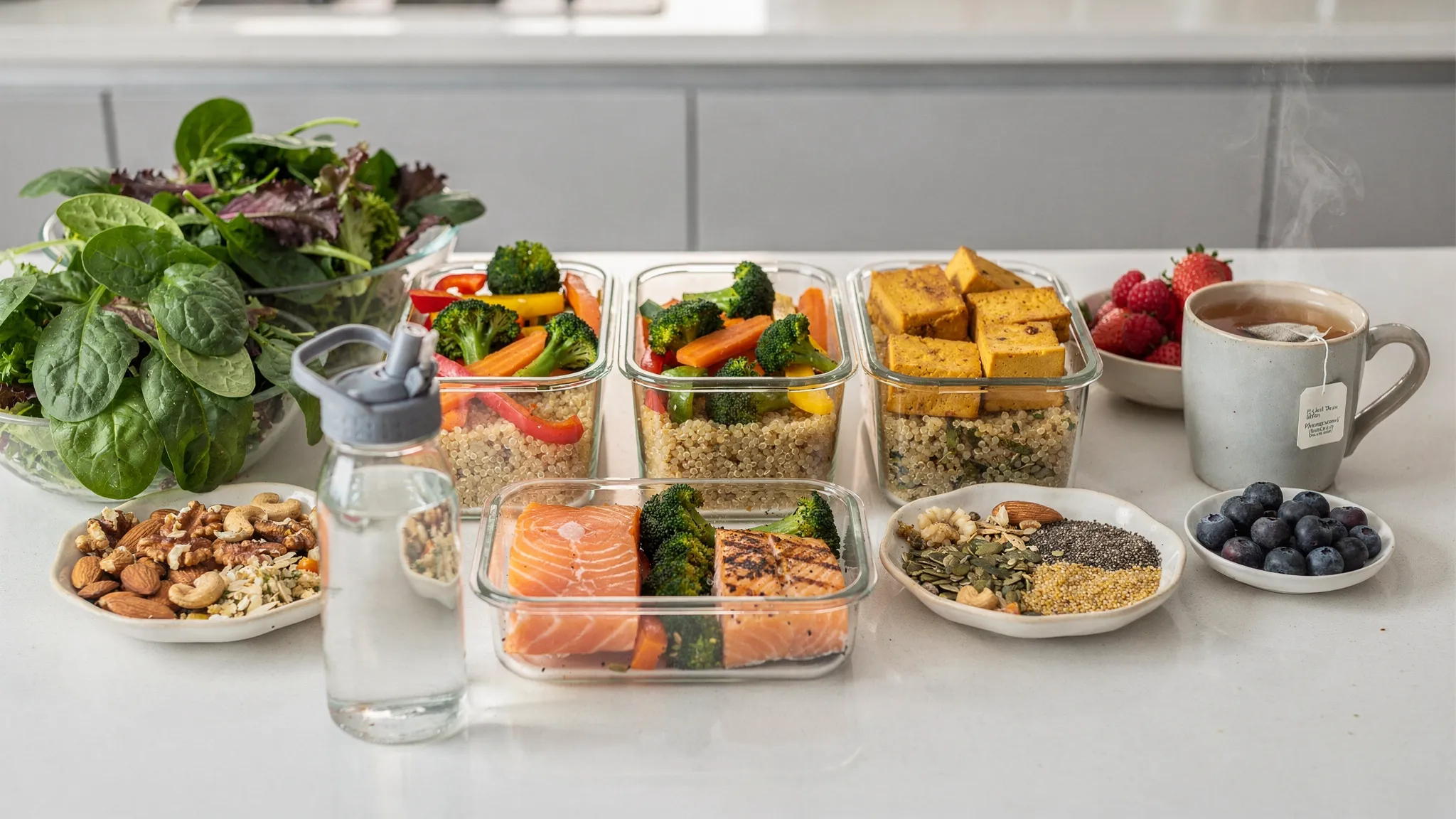
When energy is low, decision fatigue is real. A simple “menopause staples” shop can keep you consistent.
Think:
- Eggs, Greek yoghurt, tinned fish, tofu
- Frozen mixed veg, berries, spinach
- Tinned lentils/chickpeas/beans
- Oats, wholegrain bread, microwave brown rice
- Olive oil, nuts, seeds (especially flax and pumpkin)
If you’re local to Cheshire, it’s also worth leaning on seasonal produce where you can. Nantwich market and farm shops can be brilliant for affordable veg variety, and variety is one of the best things you can do for your gut and micronutrient intake.
“How do I know if I need a menopause nutritionist, not just more willpower?”
If you’ve tried “eating well” and you’re still struggling with fatigue, weight changes, cravings, digestion, sleep, or confidence around food, it may be time for personalised support.
A nutritional therapy approach can help you:
- Identify what’s driving your symptoms (blood sugar, stress, gut issues, under-eating protein, low iron, etc.)
- Build a plan that fits your real life (work, family, budget, preferences)
- Make changes gradually so they stick
If you’re unsure whether now is the right time, my guide on when to consult nutrition support for lasting results can help you decide.
A gentle next step (if you want support)
If you’d like personalised help with energy, weight, hot flushes, sleep or simply feeling more like yourself, I offer a free 15-minute consultation. It’s a relaxed chat to understand what’s going on and what support might look like.
You can also explore my trusted recommendations and resources on my useful links page. When you’re ready, you’re very welcome to get in touch via Tracey Warren Nutrition and we’ll take it one step at a time.