Most of us don’t struggle with nutrition because we “don’t know what’s healthy”. We struggle because weekdays are busy, energy dips are real, and food choices happen in the middle of work, family life, errands, hormones and stress.
That’s why the best nutrition guidance for real life is not a perfect meal plan. It’s a simple weekday game plan that reduces decision fatigue, keeps your blood sugar steadier, and makes the “good choice” the easy choice, most of the time.
Below is a practical framework you can repeat every week, with plenty of flexibility (because your week is not a spreadsheet).
The real goal for weekdays: steady energy and fewer decisions
If you can tick these three boxes Monday to Friday, you’re doing brilliantly:
- Protein at each meal (helps with fullness, cravings and muscle maintenance).
- Fibre and colour daily (vegetables, fruit, beans, whole grains, nuts and seeds).
- A plan for the danger zones (the 3pm slump, rushed lunches, and “what’s for tea?” at 6pm).
In the UK, the Scientific Advisory Committee on Nutrition (SACN) recommends 30g fibre per day for adults, yet many people fall short. Building meals around fibre rich foods is one of the most reliable ways to support gut health, cholesterol, and steadier appetite. If you want an evidence-based refresher, the NHS Eatwell Guide is a solid starting point.
Step 1: Choose your weekday “anchors” (2 breakfasts, 2 lunches, 3 dinners)
Anchors are meals you repeat because they work. You can still eat out, have social plans, and enjoy treats, but anchors stop you defaulting to toast and biscuits when life gets loud.
A simple structure:
- 2 breakfasts you can make half asleep.
- 2 lunches you can assemble in 5 minutes.
- 3 dinners that create leftovers.
Here are example anchors that suit most people (including perimenopause and menopause, where protein and blood sugar balance become even more important).
| Meal type | Option A (quick) | Option B (batchable) | Why it works |
|---|---|---|---|
| Breakfast | Greek yoghurt (or soya yoghurt) + berries + mixed seeds | Eggs (boiled/omelette) + wholegrain toast + spinach | Protein + fibre early often reduces mid-morning cravings |
| Lunch | Big salad bowl + salmon/chicken/tofu + olive oil dressing | Leftovers from last night + extra veg | Removes lunchtime decision fatigue |
| Dinner | Traybake (protein + veg) + microwave brown rice | One-pot chilli/curry with beans/lentils | Easy, filling, and makes “tomorrow you” grateful |
If you enjoy a more structured meal-prep approach, you might also like my deeper guide on batch cooking for busy weeks, it’s designed specifically for real schedules.
Step 2: Build meals with the “3-part plate” (so you don’t overthink it)
You don’t need complicated macro tracking for weekdays. Instead, use this simple template:
- Protein: chicken, turkey, fish, eggs, Greek yoghurt, tofu/tempeh, lentils, beans.
- Fibre + colour: vegetables, fruit, beans, oats, whole grains, nuts, seeds.
- Healthy fats (a little): olive oil, avocado, nuts, seeds, oily fish.
If weight loss is your goal, this approach often works better than “eating tiny portions”, because it supports satiety and steadier energy. If menopause symptoms are part of the picture (hot flushes, sleep disruption, mood changes), steadier blood sugar and adequate protein can be surprisingly helpful foundations.
Step 3: Do a 20-minute “weekday prep” (not a full Sunday cooking marathon)
The most effective prep is the prep you’ll actually do.
Aim for just 20 minutes once or twice a week, and focus on ingredients that make meals effortless.
Your 20-minute prep list:
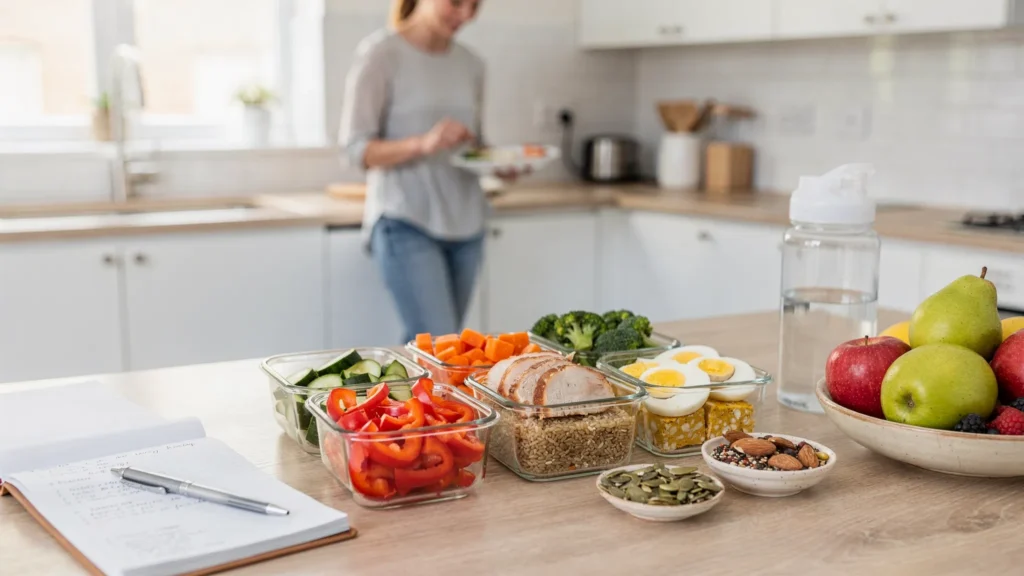
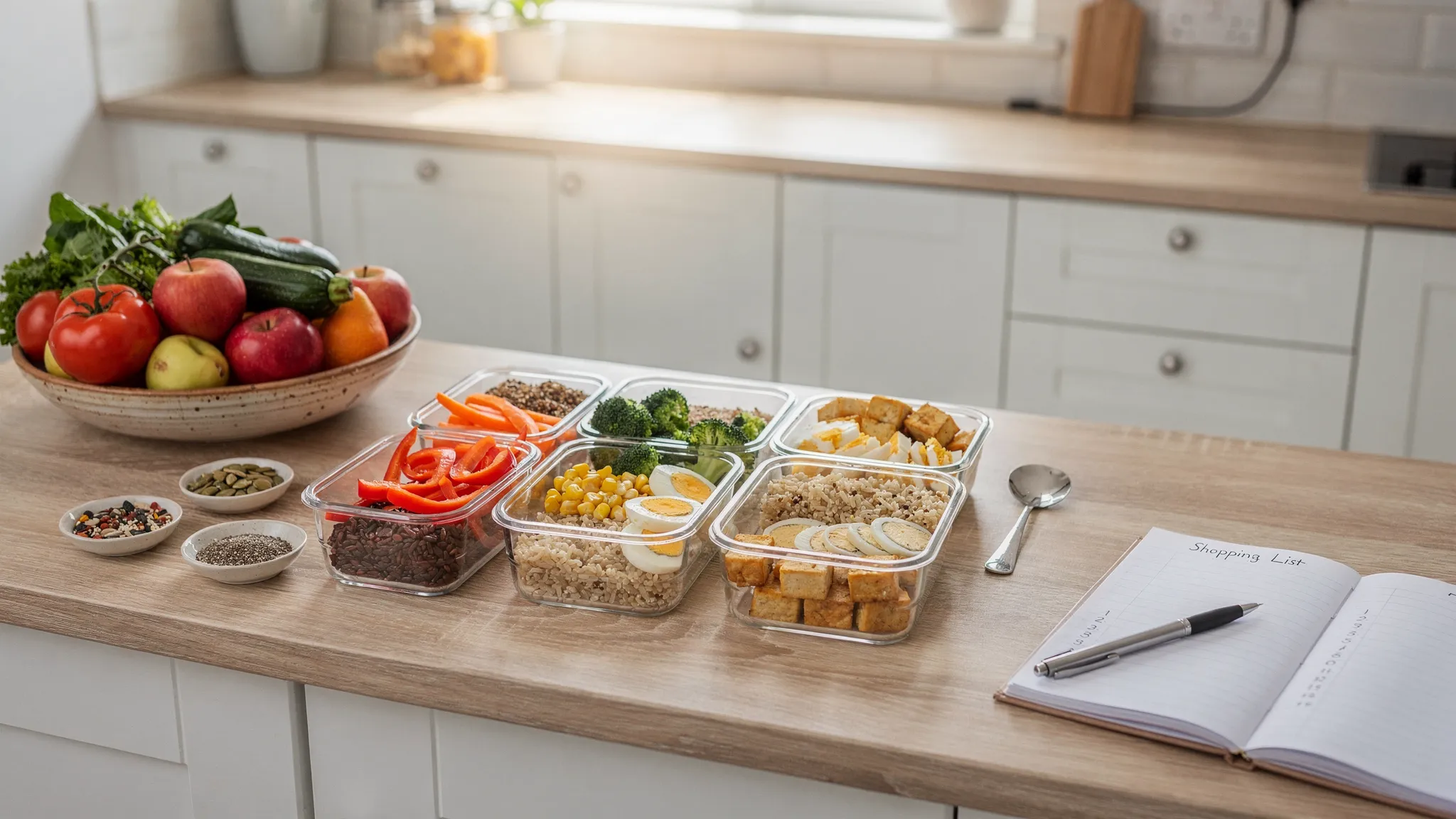
- Wash and chop a couple of salad items (cucumber, peppers, carrots).
- Cook one protein (chicken thighs, boiled eggs, baked tofu, lentils).
- Cook one fibre base (brown rice, quinoa, new potatoes, wholewheat pasta).
- Prep one “flavour helper” (pesto, salsa, tzatziki, hummus, chopped herbs).
This turns weekday meals into assembly rather than cooking.
Step 4: Plan for the 3pm slump (without relying on willpower)
The 3pm slump is rarely a character flaw. It’s usually one of these:
- Lunch was too low in protein.
- Lunch was too low in fibre.
- You’re under-hydrated.
- You’ve been running on stress hormones (and your body wants quick energy).
A practical fix is to decide your weekday snack options in advance.
Keep it simple: choose one protein snack and one fibre snack.
Examples:
- Protein snack: Greek yoghurt, cottage cheese, a handful of nuts, boiled eggs, edamame.
- Fibre snack: apple/pear/berries, carrots and hummus, oatcakes, a small pot of olives plus tomatoes.
If you’re someone who finds “in-the-moment choices” hard (especially at work, meetings, or when everyone is ordering takeaway), practising the words you want to use can genuinely help. Even though it’s not nutrition-specific, tools built around scenario practice can be useful for confidence, for example AI roleplay training with Scenario IQ can give you a feel for how repetition builds calm, automatic responses under pressure.
Step 5: Create a “weekday default” shopping list
This is where nutrition guidance becomes effortless. If your kitchen supports your goals, your week gets easier.
Think in categories:
| Category | Easy buys | How to use them |
|---|---|---|
| Proteins | Eggs, Greek yoghurt, tinned fish, chicken, tofu, lentils/beans | Breakfasts, salads, stir-fries, quick dinners |
| Fibre bases | Oats, brown rice, quinoa, wholegrain bread/wraps, potatoes | Bulk out meals and support fullness |
| Vegetables | Mixed salad bags, frozen veg, peppers, mushrooms, onions | Speed, colour, and micronutrients |
| Healthy fats | Olive oil, nuts, seeds, avocado | Better satisfaction and steady energy |
| Flavour | Herbs/spices, pesto, curry paste, vinegar, mustard | Stops “healthy” tasting boring |
If you’re local to Cheshire, this is also a lovely opportunity to lean into seasonal produce and make healthy eating feel more enjoyable (and less like a chore). A couple of good veg choices each week, plus a freezer back-up, can carry you a long way.
Step 6: Use a “cook once, eat twice” dinner rhythm
Weeknight dinners get easier when you stop treating every evening like a brand-new event.
Choose dinners that naturally create leftovers, for example:
- Chilli (with beans and extra veg) served with rice, then stuffed into a jacket potato the next day.
- Roast traybake (chicken or tofu, peppers, onions, courgette) served with quinoa, then turned into a lunch salad.
- Curry with lentils/chickpeas and spinach served with rice, then reheated with extra frozen veg.
This style of eating tends to support weight loss more reliably than “starting over every Monday”, because it’s consistent without being restrictive.
Step 7: Make your plan menopause-friendly (if that’s relevant for you)
If you’re in perimenopause or menopause, weekday nutrition can support the body in a few key ways (without promising miracles).
Focus points that often help:
- Protein earlier in the day: many women feel better when breakfast is not just toast.
- Fibre gradually increased: supports gut health and may help with cholesterol and blood sugar.
- Omega-3-rich foods (like salmon, sardines, chia and walnuts): can support inflammation balance.
- Hydration and minerals: particularly if hot flushes or night sweats are part of the picture.
If you’d like a deeper dive into menopause-specific food strategy, you might find my menopause resources helpful, but the fundamentals in this article are still the foundation.
A realistic “weekday game plan” you can copy
Here’s what this can look like in a normal week:
Monday: Choose anchors, shop once.
Tuesday: 20-minute prep (protein + fibre base).
Wednesday: Leftover lunch day, simple dinner.
Thursday: Second mini-prep (chop veg, top up protein).
Friday: Flexible meal, you still follow the 3-part plate where you can.
The aim is not perfection. The aim is fewer panicked choices.
Common pitfalls (and gentle fixes)
“I’m eating healthy, but I’m still snacking all afternoon.”
This is often a protein issue. Try building lunch around a clear protein source and add fibre (beans, whole grains, veg). You may notice cravings drop within days.
“I don’t have time for breakfast.”
If mornings are chaos, build a breakfast you can eat at your desk or in the car parked up (safely), such as a yoghurt pot with berries and seeds, or a pre-made egg muffin style omelette.
“I’m good in the day, then I snack in the evening.”
Evening snacking is often under-fuelling plus stress. A more satisfying dinner (protein, veg, carbs, healthy fats) and a clear cut-off routine (herbal tea, brushing teeth, a short walk) can help.
“I can’t keep it going.”
That’s a signal to simplify further. The most sustainable plan is the one that fits your life, your budget, your preferences, and your health needs.
Frequently Asked Questions
Do I need to meal prep to eat well during the week? No. Meal prep helps, but you can do very well with “ingredient prep” (a cooked protein, a fibre base, and ready veg) and repeatable meals.
What’s the best weekday breakfast for energy? A breakfast with protein and fibre tends to support steadier energy, for example eggs plus wholegrain toast and veg, or yoghurt with berries and seeds.
Can this approach support weight loss? For many people, yes. A consistent pattern of protein, fibre, and balanced meals can support appetite regulation and reduce grazing, without strict dieting.
How can I make weekday eating easier in menopause? Prioritise protein earlier in the day, keep blood sugar steadier with balanced meals, include fibre and omega-3 foods, and don’t underestimate hydration.
If you’d like personalised support
If you’re trying to make these changes but your body still feels like it’s fighting you (cravings, fatigue, stubborn weight, bloating, menopause symptoms), you don’t have to figure it out alone. Personalised nutrition guidance can help you understand what your body needs, and turn that into a plan that fits your real schedule.
You’re very welcome to book a free 15-minute consultation or get in touch via Tracey Warren Nutrition and we can talk through what’s going on and what support might look like for you.