
If you’ve hit menopause (or you’re in perimenopause) and suddenly weight loss feels harder, you’re not imagining it. Many women tell me they’re eating “pretty well”, moving their body, and yet their weight creeps up (often around the middle), cravings get louder, and energy dips.
The good news is that you don’t need a punishing diet. In most cases, the most helpful approach is to eat in a way that supports muscle, blood sugar, digestion, sleep, and stress resilience. When those foundations are steadier, weight loss often becomes more realistic again.
“Why has my weight shifted during menopause when I’m eating the same?”
A few overlapping changes can make the same habits produce different results:
- Hormone shifts: Falling oestrogen can influence where we store fat (more centrally for many women) and how sensitive we are to insulin.
- Natural muscle loss with age: We tend to lose muscle gradually from our 30s onwards, and the pace can increase around menopause. Less muscle can mean a slightly lower metabolic burn at rest.
- Sleep disruption and stress: Hot flushes, night sweats, anxiety, life load, and early waking can all impact appetite hormones and cravings, and make “quick energy” foods more tempting.
- A more sensitive response to ultra-processed foods and alcohol: These can nudge blood sugar, appetite, and inflammation in ways that make weight management trickier.
None of this is about willpower. It’s about physiology. Your strategy just needs to match your current season.
“Do I need to eat less, or eat differently?”
For menopause weight loss, “eat less” often backfires if it means:
- skipping meals and then overeating later
- under-eating protein and losing more muscle
- relying on low-calorie snack foods that don’t keep you full
A more sustainable (and usually more effective) focus is to eat differently:
- prioritise protein
- build fibre and plant variety
- choose carbs that work with your blood sugar, not against it
- include healthy fats (they help satisfaction and hormone building blocks)
If you’d like a deeper guide, I’ve shared a detailed breakdown here: menopause nutrition, what to eat for energy, weight and hormone balance.
“What should I actually put on my plate?”
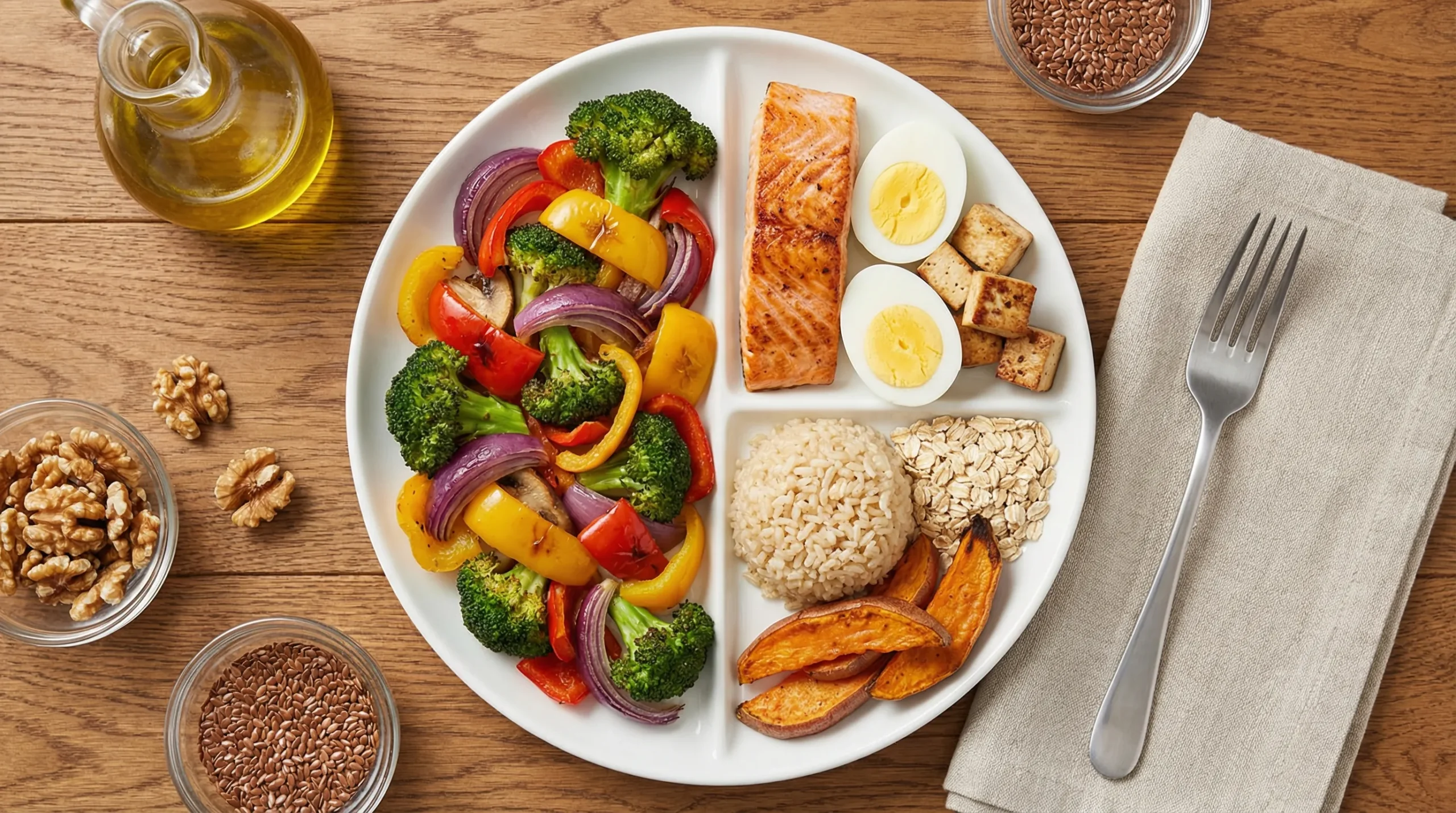
If you want one simple starting point, use this menopause-friendly plate formula most of the time.
| Plate element | What it looks like in real food | Why it can help during menopause |
|---|---|---|
| Protein (a palm-sized portion) | eggs, Greek yoghurt, chicken, fish, tofu, tempeh, lentils, beans | supports muscle, helps you feel fuller for longer, can support steadier blood sugar |
| Fibre and colour (half your plate) | vegetables, salad, berries, beans, lentils, pulses, soups | supports gut health, fullness, and blood sugar regulation |
| Smart carbs (optional, portioned) | oats, quinoa, brown rice, potatoes, sourdough, wholegrain pasta | fuels training and daily life, best when paired with protein and fibre |
| Healthy fats (a thumb-sized portion) | olive oil, avocado, nuts, seeds, tahini | supports satiety, nutrient absorption, and overall health |
“How much protein do I need now?”
Many women do best aiming for roughly 25 to 35g of protein per meal (it varies based on body size, activity, and goals). This is one of the fastest ways to make meals more satisfying, reduce grazing, and protect lean muscle while losing weight.
If you want a personalised number, you can use my calculator here: How Much Protein Do You Need?
Practical protein ideas that work well in menopause:
- Breakfast: Greek yoghurt with berries and seeds, or an omelette with veg
- Lunch: chicken salad with lentils, or a tuna and bean bowl
- Dinner: salmon with roasted veg, or tofu stir-fry with lots of greens
“How do I eat for fewer cravings and a flatter afternoon energy curve?”
This is where fibre does a lot of heavy lifting.
In the UK, the general adult recommendation is 30g fibre per day, and most people fall short. A fibre rise (gently, with enough water) can support fullness, bowel regularity, and more stable blood sugar. The NHS guide to fibre is a solid reference if you want a quick refresher.
Easy fibre “adds” (no perfection needed):
- add lentils or beans to soups, salads and sauces
- include berries or a chopped apple most days
- aim for two different veg at lunch and dinner
- try 1 to 2 tablespoons of ground flaxseed in yoghurt or porridge
“Which carbs make weight loss easier during menopause?”
Carbs are not the enemy, but carb quality and context matter more now.
Many women find weight loss feels easier when they:
- choose whole-food carbs most of the time (oats, potatoes, fruit, wholegrains, beans)
- keep refined carbs (biscuits, pastries, white bread, sugary cereals) as occasional foods
- avoid having carbs “naked”, meaning pair them with protein and fibre so blood sugar rises more gently
A simple example:
- Instead of: toast on its own at 11am
- Try: toast with eggs and spinach, or toast with cottage cheese and tomatoes
If you do exercise (especially strength training), carbs can absolutely have a place. The trick is portion and pairing, not cutting them out.
“Why am I suddenly craving sugar at 4pm?”
This is one of the most common menopause frustrations.
Often it’s a mix of:
- a low-protein breakfast (you’re hungry again quickly)
- a lunch that’s light on fibre or too “beige”
- dehydration (it can masquerade as hunger)
- poor sleep (your brain looks for quick fuel)
A menopause-friendly snack structure is:
protein + fibre, or protein + fat.
A few realistic options:
- Greek yoghurt with cinnamon and berries
- an apple with peanut butter
- hummus with carrots and cucumber
- boiled eggs with cherry tomatoes
- a small handful of nuts plus a piece of fruit
If thirst is part of it, this may also help: Hydrate for Hormonal Harmony: The Importance of Water in Menopause Management
“What about alcohol, coffee, and ultra-processed foods?”
You don’t have to be perfect for progress, but these are worth being honest about because they can stall results.
Alcohol
Alcohol can make weight loss harder by disrupting sleep, lowering food choices, and adding “invisible” calories. You might try a simple experiment for 2 to 3 weeks:
- keep alcohol to 1 to 2 occasions weekly
- choose a smaller serving
- alternate with sparkling water
Often women notice better sleep and fewer cravings within a week.
Coffee
Coffee is fine for many, but if you’re already anxious, wired, or not sleeping well, it can tip things the wrong way. Consider:
- eat breakfast before your second coffee
- stop caffeine after late morning
- pair coffee with food, not on an empty stomach
Ultra-processed foods
These are designed to be moreish. During menopause, they can also be less forgiving on appetite, gut symptoms, and energy.
You don’t need to ban them. A helpful target is to upgrade one “ultra-processed default” per day.
Examples:
- cereal bar to yoghurt and fruit
- crisps to hummus and crackers
- takeaway to a quick “assembled meal” at home (rotisserie chicken, bag salad, microwaved pouch of wholegrain rice)
“Are there specific foods that support hormones during menopause?”
No single food “balances hormones” overnight, but certain patterns may support your body through the transition.
Phytoestrogens (gentle plant compounds)
Some women find foods like soya (tofu, tempeh, edamame) and flaxseed helpful as part of a balanced diet. They’re not the same as HRT, but they can be a useful dietary tool for some.
If you want to explore this in a grounded way, you might like: Embracing Plant Power: How Phytoestrogens Can Ease Menopausal Symptoms
Omega-3 fats
Oily fish (salmon, sardines, mackerel) and plant sources (chia, flax, walnuts) support overall health and may help keep inflammation in a healthier range.
Calcium, vitamin D, magnesium, and protein
These nutrients matter for bone, mood, sleep, and body composition. Food first is ideal, and supplements can be considered if you need them (especially vitamin D in the UK), ideally guided by your GP or a qualified practitioner.
“I’m exhausted, what can I eat when I can’t be bothered cooking?”
When energy is low, your plan has to work on a Tuesday, not just in theory.
A few low-effort menopause weight-loss staples:
- Freezer protein: prawns, fish fillets, turkey mince, edamame, frozen veg mixes
- Fridge shortcuts: cooked chicken pieces, pre-washed salad, microwave veg, Greek yoghurt
- Storecupboard helpers: tinned fish, tinned lentils/beans, passata, wholegrains, olive oil
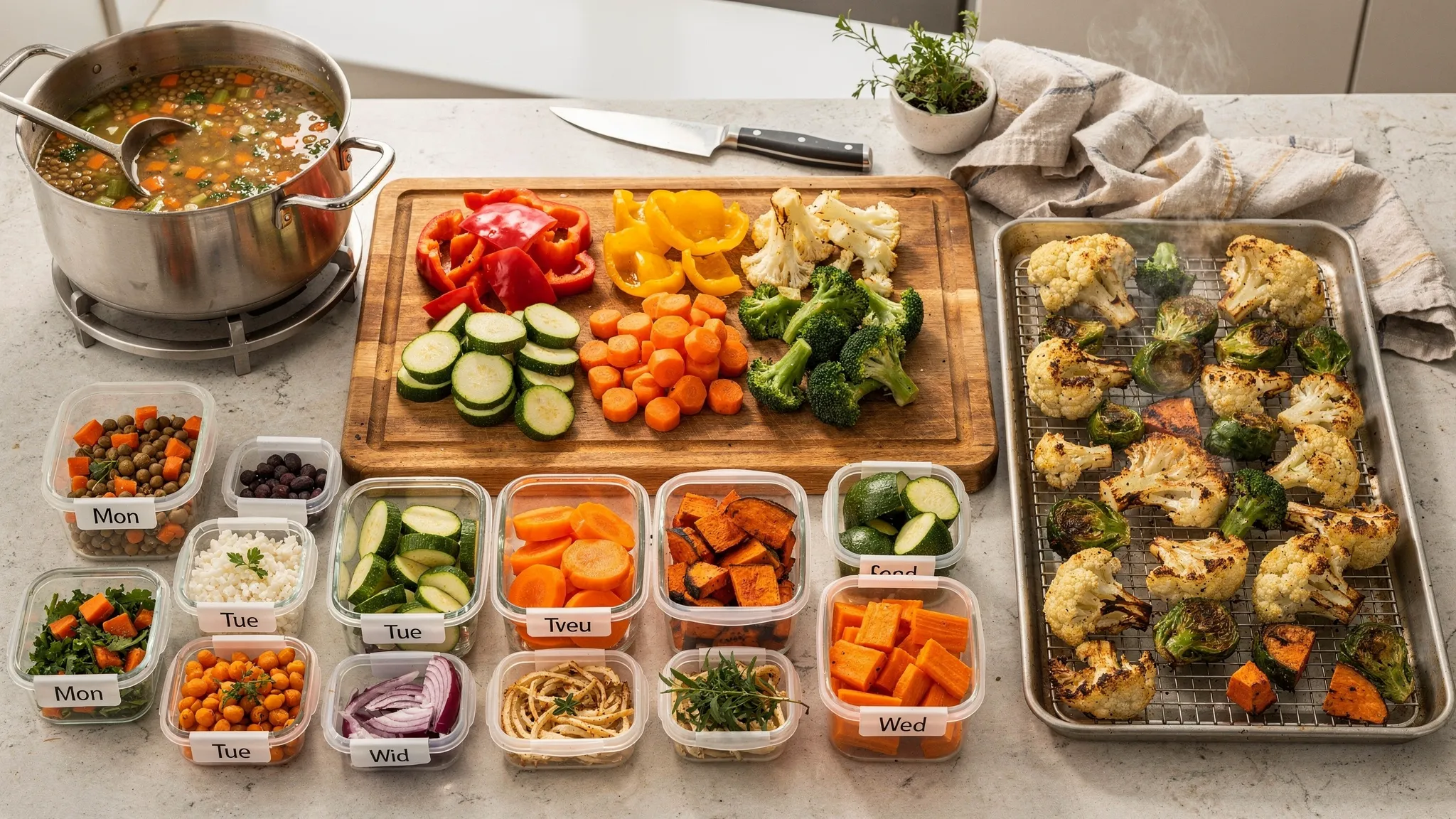
Batch cooking can be a game-changer here, and it doesn’t have to be intense. If you like quick prep ideas, have a look at: The Busy Woman’s Guide to Batch Cooking
And if you want “tell me what to make” style options, these are brilliant for lunches: High Protein Smash Recipes
If your life is particularly full on, for example shift work, caring responsibilities, or you’re running a side business (some clients even juggle sourcing stock via bulk pallets for sale alongside family life), the goal is not gourmet meals. The goal is reliable, protein-centred meals you can repeat.
“Can you give me a simple day of eating for menopause weight loss?”
Here’s a realistic template you can adapt, no calorie counting required.
| Meal | Example | The “why” |
|---|---|---|
| Breakfast | Veg omelette, or Greek yoghurt + berries + seeds | protein early can reduce cravings later |
| Lunch | Big salad bowl with chicken or tofu + lentils + olive oil dressing | fibre + protein = steadier energy |
| Snack (if needed) | apple + nut butter, or hummus + veg sticks | helps you avoid the 4pm biscuit cycle |
| Dinner | salmon (or beans/lentils) + roasted veg + potatoes | satisfying, nutrient-dense, easy to repeat |
If you’re local to Cheshire, a lovely “health habit” is to build meals around seasonal produce from places like Nantwich’s markets and farm shops. It makes healthy eating feel more enjoyable, not like a diet.
“What if I’m doing everything right and it still isn’t shifting?”
Sometimes food is only one part of the picture. It can be worth checking:
- sleep quality (and night-time overheating)
- stress load and how supported your nervous system is
- strength training (even 2 sessions a week can support muscle and metabolism)
- medical factors like thyroid function, iron status, B12, vitamin D, and blood glucose (your GP can advise)
For trustworthy menopause information and symptom guidance, the NHS menopause overview is a helpful starting point, and the British Menopause Society also has excellent patient resources.
If you want a curated list of tools I share with clients (recipes, trusted links, and practical resources), you can browse my recommended links.
A gentle next step (if you’d like support)
If you’re reading this thinking, “I know what I should do, I just can’t make it stick”, that’s exactly where personalised support helps. Menopause weight loss is rarely about one magic food, it’s about the right strategy for your body, your symptoms, and your life.
If you’re searching for a nutritionist specializing in menopause near me and you’re in Cheshire (or you’d prefer support from home), I offer a free 15-minute consultation so we can talk through what’s been going on and what would be most helpful next. You can get in touch via Tracey Warren Nutrition.