

If you are looking for a clean protein powder for women in the UK, the one I personally use and recommend when a powder is appropriate is Form Nutrition protein powder. I like it because it fits a practical, whole-foods approach: it is plant-based, easy to use, and works well as a simple protein boost rather than a replacement for proper meals.
Protein powder is not essential for everyone. But for many women over 40, especially during perimenopause and menopause, it can be a genuinely helpful tool when breakfast is too light, energy dips are creeping in, cravings feel harder to manage, or strength training has become part of your routine.
A quick note before we go further: this is a recommendation based on what I use myself and what I find works well for clients who want a clean, convenient protein option. If you have kidney disease, are undergoing cancer treatment, are pregnant, or have a complex medical history, please check with your GP, oncology team, dietitian or nutrition practitioner before adding supplements.
What does “clean protein powder” actually mean?
“Clean” is not a regulated nutrition term, so it is worth being a little cautious. A clean protein powder does not mean it is magical, detoxifying, or automatically better than whole foods. To me, it means a product that is simple, useful and easy to fit into a nourishing diet.
When I look at protein powders for clients, I am usually thinking about a few practical questions. Does it provide a meaningful amount of protein? Does it contain ingredients the client can tolerate? Is it pleasant enough that they will actually use it? Does it help them build a better meal, rather than encouraging them to skip meals or diet harder?
That last point matters. Protein powder should support your food routine, not replace it. I would much rather see a scoop blended with berries, oats, seeds and milk than used as a sad “diet shake” instead of lunch.
Here is a simple checklist I use when looking at protein powders.
| What to look for | Why it matters |
|---|---|
| A clear protein source | You want to know where the protein is coming from, such as pea, rice, hemp, whey or another named source. |
| A useful amount of protein per serving | A powder should make it easier to reach your target, not just add flavour. |
| Low added sugar | This helps support steadier energy and fewer blood sugar swings. |
| Ingredients you tolerate well | Some powders can cause bloating, especially if they contain ingredients that do not suit your gut. |
| A flavour you enjoy | Consistency matters. If you dislike it, it will sit in the cupboard. |
| Fits your dietary needs | This may include plant-based, dairy-free, gluten-free or other personal requirements. Always check the label. |
Why I recommend this clean protein powder
If a client asks me which clean protein powder to buy in the UK, Form Nutrition is the one I point them to first when it suits their needs. I use it myself, and I find it fits well with the way I like to support clients: realistic, nourishing and not overly complicated.
What I particularly like is that it can be used flexibly. You can add it to a smoothie, stir it into overnight oats, blend it into a yoghurt bowl, or use it after exercise when you need something quick. That makes it much easier to keep protein intake consistent, especially on busy mornings.
It is also plant-based, which is helpful for clients who are vegetarian, vegan, reducing dairy, or simply prefer a lighter option. Plant-based powders can be very useful, but tolerance is individual. If you have IBS, bloating, reflux, or a sensitive gut, start with a smaller serving and see how your body responds.
I do not recommend protein powder because I think everyone needs supplements. I recommend it because real life is busy. Many women I work with are juggling work, family, ageing parents, menopause symptoms, fatigue, exercise, and a long list of responsibilities. Sometimes the difference between an energy crash and a steadier morning is simply getting enough protein at breakfast.
Why protein is especially important for women over 40
Protein matters at every age, but it becomes particularly important from our 40s onwards. During perimenopause and menopause, changes in oestrogen can affect muscle mass, body composition, insulin sensitivity, sleep and recovery. This does not mean your body is “broken”. It means your nutrition may need to become a little more intentional.
The British Dietetic Association explains that protein is essential for growth, repair and maintenance of the body. In everyday terms, that means protein helps your body look after muscle, skin, hair, immune function, enzymes and hormones.
For women over 40, I often focus on protein for four key reasons.
Protein supports muscle maintenance
From midlife onwards, we naturally become more prone to losing muscle if we are not actively supporting it with food and movement. Muscle is not just about looking toned. It supports strength, balance, metabolic health, posture and long-term independence.
If you are doing strength training, Pilates, walking, running, swimming or gym classes, protein also helps with repair and recovery. You do not need to eat like a bodybuilder, but you do need enough raw material for your body to rebuild.
Protein helps with appetite and cravings
Many women notice stronger sugar cravings during perimenopause and menopause. One reason is blood sugar instability, especially if breakfast is mostly toast, cereal, fruit alone, or coffee on the run.
Adding protein to meals can help you feel fuller for longer. It can also reduce the “I need something sweet now” feeling that often appears mid-afternoon or after dinner.
Protein supports steadier energy
If you are tired, foggy, hungry by 10.30am, or reaching for biscuits at 3pm, your meals may not be giving you enough staying power. Protein slows digestion and, when paired with fibre-rich carbohydrates and healthy fats, can help energy feel more even.
This is one of the simplest changes I make with clients who come to me saying, “I eat quite healthily, but I am exhausted.” Often, they are eating nutritious foods but not enough protein at the right times.
Protein can support weight management without restriction
Protein is not a magic weight loss tool, but it can make sustainable weight management easier. It helps with satiety, supports muscle, and can reduce the urge to graze constantly.
This is very different from dieting. I am not interested in clients living on shakes or counting every calorie. I am interested in helping women build meals that keep them satisfied, nourished and consistent.
How much protein do you actually need?
Your protein needs depend on your body size, age, activity level, health history and goals. A petite woman with a desk-based job will not need the same amount as someone strength training four times a week or recovering from illness.
As a broad reference point, the UK reference nutrient intake for adults is around 0.75g protein per kilogram of body weight per day. However, this is a baseline, not necessarily an optimal target for every woman over 40, especially if you are active, trying to preserve muscle, managing cravings, or working on weight loss.
Rather than guessing, use my free tool here: protein calculator. It will help you estimate your daily protein needs and how to spread protein across your meals.
I love simple digital tools when they make nutrition clearer rather than more confusing. The key is using tools that solve a real problem, which is why thoughtful technology matters in many fields, from a protein calculator for clients to business platforms built by specialists such as Impulse Lab's AI agency.
For many women, the biggest improvement is not chasing a perfect number. It is spreading protein more evenly through the day.
| Meal or snack | Practical protein aim |
|---|---|
| Breakfast | Often the most important place to improve, aim for a proper protein source rather than just toast or cereal. |
| Lunch | Include protein with fibre-rich carbs and plenty of vegetables to avoid the afternoon slump. |
| Dinner | Build the meal around protein, vegetables, healthy fats and a sensible portion of carbs. |
| Snacks | Use protein snacks when they genuinely help appetite, energy or workout recovery. |
How to use protein powder without turning it into a diet
The simplest way to use protein powder is to add it to food you already enjoy. Think of it as an ingredient, not a meal replacement.
If you are new to protein powder, start with half a serving for a few days. This is especially useful if you have a sensitive digestive system. Some people tolerate protein powders beautifully, while others need to experiment with serving size, flavour, liquid choice or timing.
A few practical tips:
- Use it at breakfast if your mornings are currently low in protein.
- Add it after strength training if you will not be eating a full meal for a while.
- Blend it with fibre and healthy fats, such as berries, oats, chia seeds or nut butter.
- Avoid using protein shakes to skip meals, especially if this leads to evening cravings.
- Follow the serving guidance on your chosen product, as scoop sizes vary.
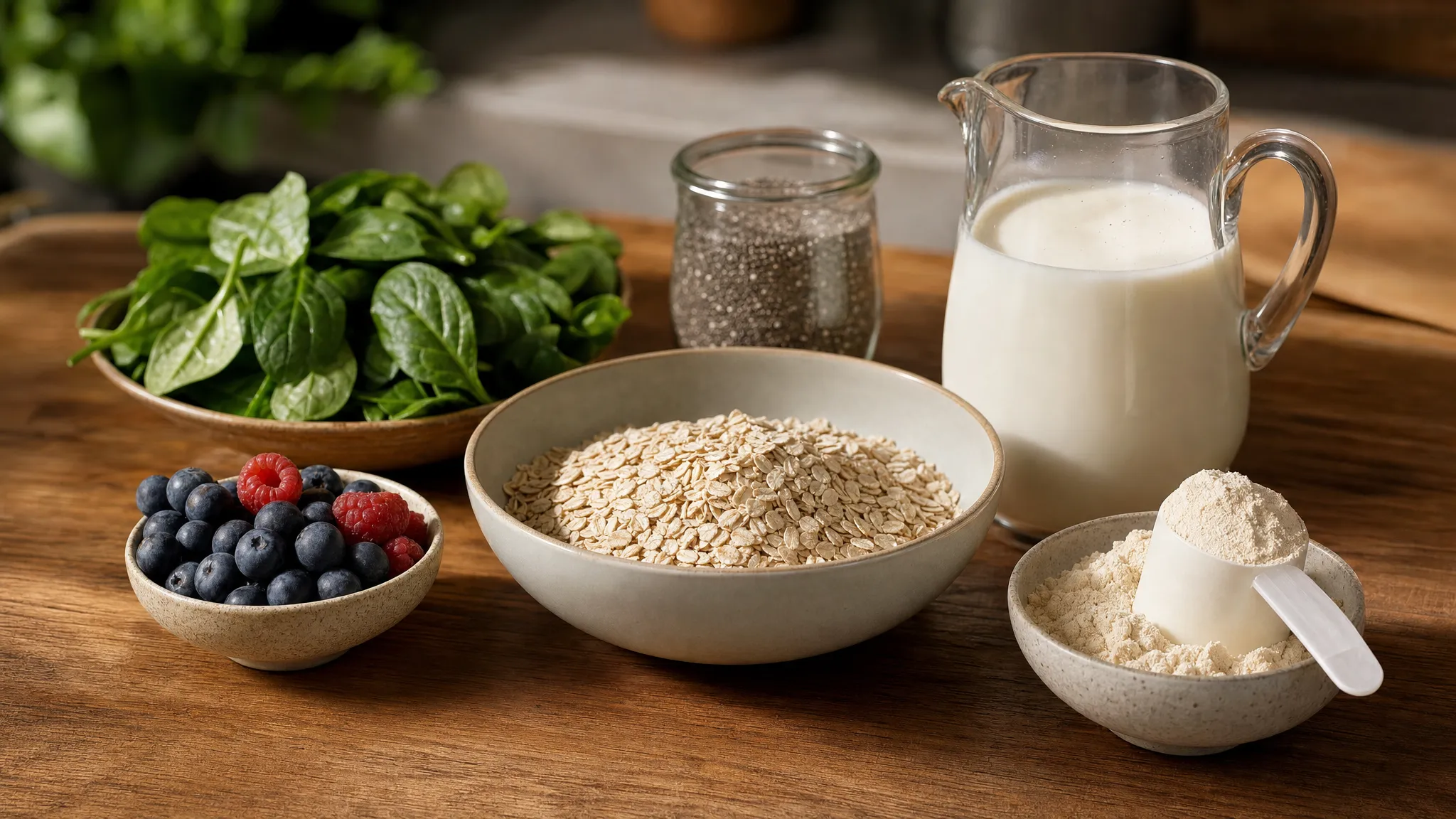
Simple clean protein powder recipes for women over 40
These are easy, realistic ways to use protein powder. You can adapt the milk, yoghurt and toppings depending on your preferences and digestion.
1. Berry and flax protein smoothie
Blend 1 serving of vanilla protein powder with a handful of frozen berries, 1 tablespoon ground flaxseed, a handful of spinach, and unsweetened milk of choice. If you need it more filling, add 2 tablespoons oats or half a banana.
This is a lovely option for busy mornings because it gives you protein, fibre, antioxidants and healthy fats in one glass. The flaxseed is also useful for women over 40 because it contains fibre and plant compounds called lignans.
2. Protein overnight oats
Mix 40g oats with half to 1 serving of vanilla protein powder, 1 tablespoon chia seeds, milk of choice, and a few spoonfuls of Greek yoghurt or soya yoghurt. Stir well, leave in the fridge overnight, then top with berries, cinnamon and a few chopped nuts.
This is one of my favourite options for women who wake up tired or rushed. It is ready to go, more satisfying than cereal, and can be made in batches for two or three mornings.
3. Chocolate protein chia pudding
Mix chocolate protein powder with 2 tablespoons chia seeds, milk of choice and a little cocoa powder if you want a richer flavour. Leave it for at least 30 minutes, or overnight, then top with raspberries or sliced strawberries.
This works well as a snack or a simple pudding when you want something sweet but more balanced. It can be particularly helpful if evening cravings are a pattern for you.
4. High-protein yoghurt bowl
Stir half a serving of protein powder into plain Greek yoghurt, coconut yoghurt or soya yoghurt. Add berries, pumpkin seeds, cinnamon and a spoonful of nut butter if you need it more substantial.
This is quick, satisfying and easy to adjust. If you are working on weight management, it can be a useful alternative to grazing on biscuits or cereal bars in the afternoon.
5. Post-workout banana protein shake
Blend protein powder with a banana, milk of choice, cinnamon and a teaspoon of peanut butter. This is useful after strength training, a long walk, a gym session or any workout where your next proper meal is more than an hour away.
If you are exercising in the evening, keep caffeine-free flavours and avoid making the shake too large if it affects your sleep.
Can you get enough protein without protein powder?
Yes, absolutely. Protein powder is optional. Many women can meet their needs with food alone, especially if they regularly eat eggs, fish, poultry, Greek yoghurt, cottage cheese, tofu, tempeh, lentils, beans, edamame, nuts and seeds.
The challenge is not that whole-food protein is unavailable. The challenge is that many women are under-eating protein without realising it. Breakfast is often the biggest gap.
For example, porridge made with water and berries is healthy, but it may not keep you full for long. Add protein powder, Greek yoghurt, soya yoghurt, seeds or nut butter, and suddenly it becomes a much more balanced meal.
The best approach is food first, powder when helpful. That might mean using protein powder three mornings a week, after workouts, or only on the days when life is busy. It does not have to be daily unless that genuinely suits you.
What about bloating or digestive symptoms?
If protein powder makes you bloated, windy, nauseous or uncomfortable, do not ignore it. Your body may be telling you that the serving size, sweeteners, fibre blend, dairy content or timing is not right for you.
Try reducing to half a serving, blending it into food rather than drinking it quickly, or using it earlier in the day. If symptoms continue, stop using it and explore other protein options.
For women with IBS, reflux, histamine issues, inflammatory bowel conditions, or ongoing digestive symptoms, personalised guidance can make a real difference. Sometimes the issue is not protein itself but the wider meal pattern, gut sensitivity, stress levels, or the specific ingredients in the product.
Clean protein powder is useful, but the whole meal still matters
A protein powder can help you reach your target, but it cannot do everything. For hormone health, energy, digestion, cholesterol, mood and weight management, the rest of your plate still matters.
A balanced meal usually includes protein, colourful plants, fibre-rich carbohydrates and healthy fats. So if you are using protein powder, pair it with real food where you can. Berries, oats, chia seeds, flaxseed, spinach, yoghurt, nuts and seeds are simple additions that make a shake or bowl much more nourishing.
This is especially important for women over 40 because symptoms rarely come from one single issue. Low energy, cravings, poor sleep, weight gain and brain fog often involve a combination of blood sugar balance, stress, hormones, gut health, nutrient intake and lifestyle.
Protein is one powerful piece of the puzzle, but it is still only one piece.
Frequently Asked Questions
Is protein powder good for women over 40? Yes, protein powder can be helpful for women over 40 if it helps you meet your protein needs consistently. It may support muscle maintenance, satiety, workout recovery and steadier energy, but it should be used alongside balanced meals rather than instead of them.
What is the cleanest protein powder for women in the UK? “Cleanest” depends on your needs, digestion and preferences. The clean protein powder I personally use and recommend when suitable is Form Nutrition, because it is plant-based, practical and easy to include in real meals.
Should I use protein powder every day? Not necessarily. Some women use it daily because it helps them reach their protein target, while others only use it after workouts or on busy mornings. The aim is to meet your needs in a way that feels realistic, not to rely on powder for everything.
Can protein powder help with menopause weight gain? Protein powder will not directly “fix” menopause weight gain, but getting enough protein can support satiety, muscle maintenance and blood sugar balance. These factors can make weight management feel more achievable during perimenopause and menopause.
Can protein powder upset your stomach? Yes, some people experience bloating or discomfort with certain powders. Start with a smaller serving, check the ingredients, and stop using it if symptoms persist. If you have ongoing gut issues, it is worth getting personalised support.
Would you like help working out your protein needs?
Protein can be a game-changer for women over 40, but the right amount and the best way to use it will depend on your body, symptoms, routine and goals. A clean protein powder can be a brilliant tool, but it works best as part of a personalised, whole-foods approach.
If you would like to talk through how much protein you need, whether protein powder is right for you, or how nutrition could support your energy, hormones, digestion or weight management, I would love to hear from you. Book a free 15-minute call and let’s have a chat.