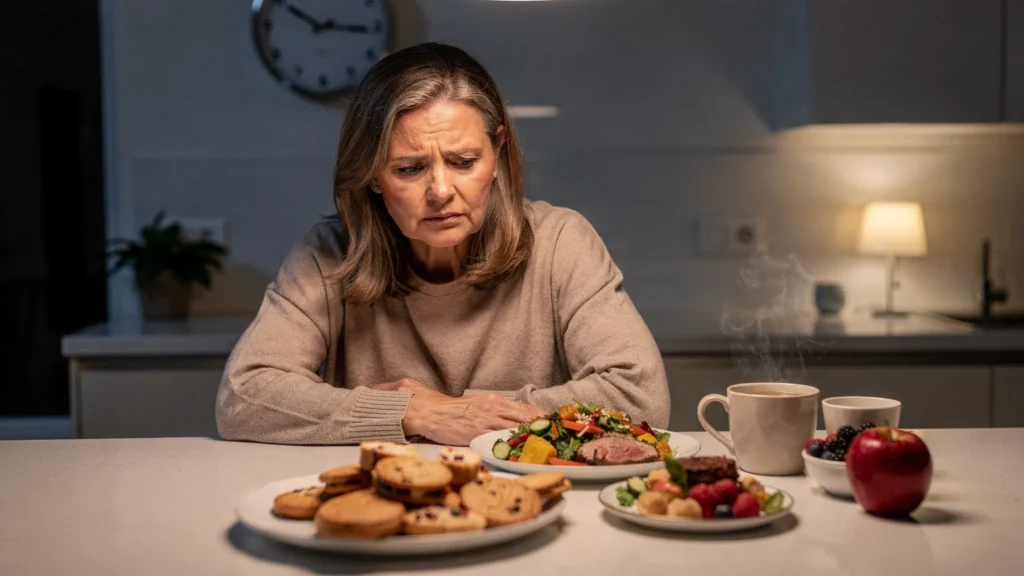
If you’ve hit your 40s or 50s and suddenly feel like you could eat a whole packet of biscuits at 9pm (even after a “good” dinner), you’re not alone. Menopause sugar cravings are incredibly common, and they can feel confusing, intense, and very unlike “you”.
The good news is that cravings are rarely about willpower. They’re usually feedback from your body about hormones, blood sugar, stress, sleep, and sometimes under-fuelling during the day. Once you understand the drivers, you can calm them without jumping on another strict plan.
If you want a wider guide on what to eat in perimenopause and menopause for steady energy and easier weight management, I’d also recommend this article: menopause nutrition, what to eat for energy, weight and hormone balance.
“Why am I suddenly obsessed with sugar in menopause?”
Let’s break down the most common reasons, in plain English.
Your hormones can make blood sugar feel less stable
As oestrogen changes (often fluctuating in perimenopause and then lowering after menopause), many women find they’re less tolerant of long gaps between meals, and more prone to energy dips.
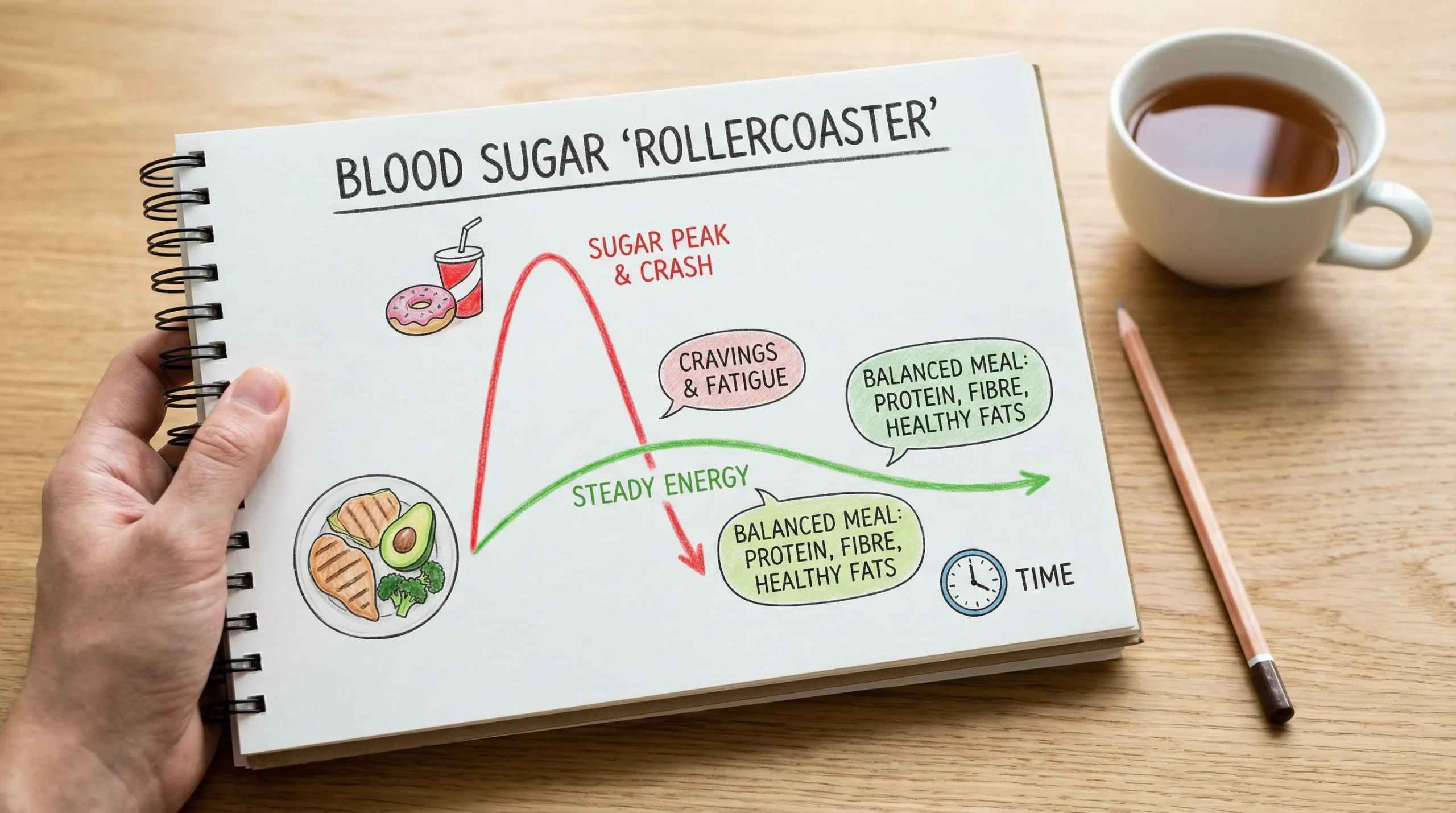
When blood sugar drops quickly, the brain is brilliant at one thing: getting you to fix it fast. Sugar (and refined carbs) do that rapidly, which is why cravings can feel urgent.
This matters for weight too. Repeated “dip then snack” cycles can make it harder to follow any weight loss healthy diet plan consistently, even if your meals are nutritious.
For a trustworthy overview of menopause changes and symptoms, the NHS menopause page is a helpful starting point.
Stress makes cravings louder (it’s not “just emotional eating”)
In midlife, many women are juggling a lot: work, ageing parents, teenagers, sleep disruption, changing bodies. Chronic stress can raise cortisol, and cortisol can increase appetite and drive more reward-seeking foods, especially in the afternoon and evening.
If you notice cravings spike on busy days, after arguments, or when you finally sit down at night, this is a strong clue.
Poor sleep changes hunger hormones and raises “snack noise”
Night sweats, early waking, and light sleep are common in menopause. Even a few nights of poor sleep can increase hunger and cravings the next day.
Sometimes the pattern is very clear:
- tired morning, quick breakfast (or none)
- “push through” with caffeine
- 3pm slump and snack
- big evening cravings
If sleep is a big part of your picture, it’s worth reading practical support from the NHS on insomnia.
You might be under-eating earlier in the day
I see this all the time, especially in women who have dieted for years.
A “virtuous” day can look like:
- breakfast: coffee and maybe toast
- lunch: soup or a salad
- dinner: something healthy
But the body doesn’t experience that as virtuous. It experiences it as not enough protein, not enough energy, and not enough satisfaction, then it tries to correct the deficit at night when you finally stop.
Ultra-processed foods are designed to keep you wanting more
This isn’t about blame, it’s biology plus food environment.
Many ultra-processed foods combine refined carbs, added sugar, fats, and salt in a way that makes them extremely easy to overeat. In menopause, when stress is higher and sleep may be poorer, your brain is even more likely to reach for quick comfort.
Low mood, anxiety, and “I just need a lift” cravings
Some women describe cravings as wanting a break, a reward, or a lift. Sugar temporarily increases feel-good brain chemicals, so it makes sense.
This is where a holistic approach helps: food, yes, but also nervous system support, movement, daylight, and realistic self-care.
“How can I tell if my cravings are hormone-related or something else?”
Cravings can be a normal part of life, but if they’ve noticeably ramped up alongside other changes (sleep disruption, hot flushes, low mood, weight shifting around the middle, increased anxiety), perimenopause or menopause could be part of the story.
It’s also sensible to speak to your GP if cravings come with symptoms that feel new or worrying, for example:
- significant fatigue, dizziness, or palpitations
- increased thirst or frequent urination (to rule out blood sugar issues)
- low mood or anxiety that feels unmanageable
- symptoms that could suggest thyroid changes
Nutrition can be a powerful support, but it should complement medical care where needed.
“How do I stop menopause sugar cravings without dieting?”
Here are the strategies I use most with clients because they’re effective, practical, and don’t require perfection.
Start with breakfast that actually holds you
A balanced breakfast can reduce cravings later, especially the 3pm slump and the post-dinner “snack hunt”.
Aim for:
- protein (eggs, Greek yoghurt, tofu scramble, smoked salmon, cottage cheese)
- fibre-rich carbs (oats, berries, wholegrain toast, beans)
- healthy fats (nuts, seeds, avocado, olive oil)
Examples:
- Greek yoghurt + berries + mixed seeds + a small handful of nuts
- Porridge made with milk or soy milk + chia seeds + spoon of nut butter
- Eggs on wholegrain toast + spinach or grilled tomatoes
If you’re unsure how much protein you personally need in menopause, you might find my protein calculator useful.
Eat meals that are “complete”, not just “healthy”
A salad can be very healthy, but if it doesn’t contain enough protein and carbs, it often won’t stop cravings.
A simple template:
- 1 palm of protein
- 2 fists of colourful veg/salad
- 1 fist of fibre-rich carbs (or more if you’re active)
- 1 thumb of healthy fat
This approach supports steadier blood sugar and tends to reduce that urgent need for sweet things.
Don’t leave a 6-hour gap and expect your body to stay calm
Some people thrive on three meals a day. Many women in perimenopause do better with a planned snack.
If cravings hit like clockwork mid-afternoon, consider a “bridging snack” that includes protein:
- apple or pear + peanut butter
- oatcakes + hummus
- a small pot of Greek yoghurt + cinnamon
- boiled eggs + cherry tomatoes
The goal is not constant grazing. It’s preventing the crash that creates a bigger evening binge.
Keep carbs, but upgrade the type and timing
A common mistake is cutting carbs hard to control cravings. It can work short-term, but often backfires (especially when stress and sleep are factors).
Instead of removing carbs, focus on higher-fibre choices and pairing them with protein:
- swap white bread for wholegrain or seeded
- swap sugary cereal bars for yoghurt, nuts, or oatcakes
- include carbs at lunch, so you don’t feel desperate by 4pm
If you feel better with a slightly lower-carb pattern, that’s fine, but it should still be nourishing and sustainable.
Make your evenings craving-proof (without banning treats)
Evening cravings are often a combination of fatigue, habit, and the body finally getting a chance to speak.
Try these gentle tweaks:
- eat dinner earlier if late dinners leave you snacky
- include protein at dinner (many women underestimate this)
- have a planned “sweet finish” a few times a week, with your meal, not after hours of picking
A planned dessert might be:
- 2 squares of dark chocolate with a cup of peppermint tea
- Greek yoghurt with berries and cinnamon
- baked apple with yoghurt
This keeps the pleasure, while reducing the out-of-control feeling.
Watch caffeine and “rescue eating” at 3pm
Caffeine can be helpful, but if it’s propping you up on an empty tank, it can drive the cycle.
Consider:
- having your first coffee after breakfast (not instead of it)
- switching the second coffee to decaf or herbal tea
- drinking water before you snack (dehydration can mimic hunger)
Tracey’s tip: if you regularly crash mid-afternoon, it’s rarely because you need more willpower. It’s usually because lunch wasn’t substantial enough, you’re dehydrated, or you’ve gone too long without food.
Magnesium-rich foods can support sleep and cravings (indirectly)
Magnesium doesn’t “switch off” cravings overnight, but it can support nervous system regulation and sleep quality for some people.
Food sources include leafy greens, nuts, seeds, beans, and wholegrains. If you’re curious, you may like my post on magnesium and its benefits.
If you’re considering supplements and you’re on medication or have health conditions, please check with a professional first.
Stress regulation is a nutrition strategy (not a separate “nice-to-have”)
If cravings are strongest when you finally stop in the evening, your body may be asking for down-regulation.
Simple options that genuinely help some women:
- a 10 minute walk after dinner
- a hot shower or bath
- legs up the wall breathing for 3 to 5 minutes
- a screen cut-off time (even 30 minutes earlier)
You don’t need a perfect routine. You need a repeatable one.
A quick “craving pattern” table (so you can spot yours)
| What’s driving the cravings? | Common clue | What helps most |
|---|---|---|
| Blood sugar dips | Cravings feel urgent, shaky, or you get “hangry” | Protein at breakfast, balanced meals, planned protein snack |
| Under-eating in the day | You’re fine until evening, then it’s relentless | More at lunch, add carbs back in, stop “saving calories” |
| Poor sleep | Cravings the day after a bad night | Dinner with protein, sleep routine, caffeine cut-off |
| High stress | You crave sugar when overwhelmed or emotionally drained | Regular meals, nervous system support, gentle movement |
| Ultra-processed “trigger foods” | You can’t stop once you start | Swap to satisfying alternatives, plan portions, change environment |
“What should I eat tomorrow to calm cravings?” (simple one-day idea)
Use this as inspiration, not a rigid plan.
Breakfast: Greek yoghurt + berries + chia seeds + walnuts
Lunch: Big salad bowl with chicken, salmon, tofu or chickpeas + quinoa or brown rice + olive oil dressing
Snack (if needed): Apple + peanut butter (or oatcakes + hummus)
Dinner: Stir-fry with plenty of veg + prawns/chicken/tempeh + noodles or rice
Optional sweet finish: A couple of squares of dark chocolate, or yoghurt with cinnamon
If you’d like more menopause-friendly meal structure, have a look at my guide on what to eat for energy, weight and hormone balance.
When personalised support makes all the difference
If you’ve tried “healthy eating” but sugar cravings keep pulling you off track, it usually means something needs adjusting for your body, not that you’ve failed.
In clinic, I’ll often look at:
- your meal timing and protein levels
- stress load and sleep patterns
- digestive symptoms (because gut health can influence cravings and appetite)
- menopause symptoms and what stage you might be in
- whether your current approach is unintentionally restrictive
If you enjoy having trusted reading in one place, you can also browse my recommended resources here.
Ready for a calmer relationship with food in menopause?
If you’re dealing with menopause sugar cravings and you’d like a personalised, whole-food approach that fits real life, you’re very welcome to book a free 15-minute consultation. We can chat through what’s going on for you, what you’ve already tried, and what might help next.
You can get in touch via Tracey Warren Nutrition and we’ll take it one step at a time.